
Rethink Your Daily Commute and Travel Habits
Commuting is one of the largest contributors to an individual's carbon footprint, but you do not need to sell your vehicle to make a positive impact. Start by conducting a personal "commute audit" over a typical week. Track every trip, noting the mileage, purpose, and whether the vehicle was fully loaded. You will likely find several trips that can be consolidated. Combining multiple errands into a single, well-planned route reduces overall mileage, saves fuel, and minimizes wear and tear on your vehicle.
This consolidation is particularly important because short trips—specifically those under two miles—often involve "cold starts." During a cold start, your vehicle's engine and catalytic converter have not yet reached their optimal operating temperatures, causing the vehicle to burn more fuel and emit significantly more pollutants per mile than it would during longer, continuous drives. To mitigate this, consider replacing short car trips with walking or cycling. For longer commutes, try designating just one day a week as a public transit or carpooling day. This reversible trial allows you to test local transit schedules and route efficiency without permanently giving up the convenience of your personal vehicle. You can consult resources like the EPA's Green Vehicle Guide to learn more about how driving habits and vehicle choices affect your overall environmental footprint.
Sources: www.epa.gov
Optimize Home Energy Use with Simple Adjustments
Heating, cooling, and powering a home require significant energy, much of which is wasted through passive consumption. You can easily lower your energy footprint by adjusting your thermostat by just two to three degrees—downward in the winter and upward in the summer. According to the U.S. Department of Energy and ENERGY STAR guidelines, setting your thermostat to 68°F in the winter while awake (and lower when asleep or away) and 78°F in the summer can yield substantial savings. In fact, adjusting your thermostat by 7 to 10 degrees for eight hours a day can save you up to 10% on annual heating and cooling bills.
Utilizing ceiling fans to circulate air can also make rooms feel cooler without relying heavily on air conditioning. However, keep in mind the classic limitation: fans cool people, not rooms, by creating a wind-chill effect on your skin. Always turn them off when you leave the room to avoid wasting electricity. Another simple adjustment involves addressing "vampire power"—the energy consumed by electronics when they are turned off but still plugged in. Connecting entertainment centers and home office equipment to an ENERGY STAR certified smart power strip allows you to cut power to multiple devices simultaneously. This step is entirely reversible and lets you easily restore continuous power whenever needed. For automated efficiency, upgrading to an ENERGY STAR certified smart thermostat can save an average of 8% on heating and cooling costs by learning your household's schedule and adjusting temperatures automatically.
Sources: www.energystar.gov
Transition to Mindful Meal Planning and Food Storage
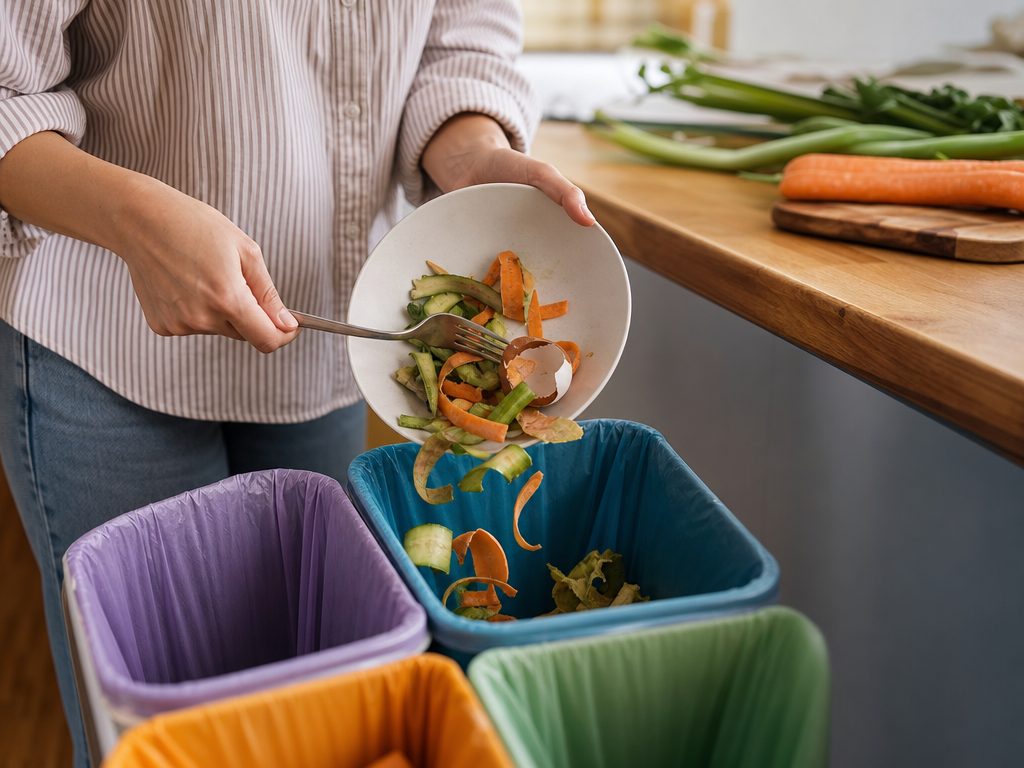
Food production is highly resource-intensive, and a substantial portion of produced food ultimately ends up in landfills, where it generates greenhouse gases. The U.S. Environmental Protection Agency (EPA) estimates that food waste is the single most common material landfilled in the United States, comprising approximately 24 percent of municipal solid waste. When organic waste rots in the anaerobic environment of a landfill, it produces methane, a greenhouse gas that is more than 28 times as potent as carbon dioxide at trapping heat in the atmosphere.
To combat this, adopt a structured meal planning routine. Before shopping, take an inventory of your pantry and refrigerator to avoid purchasing duplicate items that might spoil before use. Additionally, align your habits with the EPA’s Wasted Food Scale, which prioritizes source reduction (preventing waste before it starts) and food donation over recycling or landfilling. Consider designating one or two days a week for plant-focused meals. Shifting even a small portion of your diet away from resource-heavy animal products reduces demand on agricultural systems. Because this change is completely flexible, you can adjust your meal plans weekly based on your schedule, budget, and personal preferences.
Sources: www.epa.gov
Curate a Low-Waste Shopping Routine
Modern consumer goods often come wrapped in layers of single-use plastic, much of which cannot be easily recycled. Transitioning to a low-waste shopping routine involves making conscious choices about packaging. Start by keeping reusable shopping bags in highly visible locations, such as your vehicle's trunk or right next to your front door, so you do not forget them when heading to the store.
When browsing the aisles, opt for products packaged in recyclable materials like glass, aluminum, or cardboard rather than plastic. If bulk options are available in your local grocery stores, consider bringing your own reusable containers to fill. Be sure to verify local health codes and store policies regarding customer-provided containers, as these rules and guidelines can change frequently. For those looking to minimize packaging further, buying concentrated versions of household goods—such as laundry detergent sheets or dilutable cleaning solutions—significantly reduces both plastic waste and the carbon emissions associated with shipping heavy, water-filled bottles.
Sources: www.epa.gov

Establish a Conscious Water Conservation Practice
Conserving water at home preserves a vital resource and reduces the energy required to treat and pump water to your household. Simple behavioral changes, such as turning off the faucet while brushing your teeth or shaving, can save up to 3,000 gallons of water per year. Similarly, keeping your showers to under ten minutes can make a measurable difference over time.
For a more structural but reversible improvement, install low-flow aerators on your bathroom and kitchen faucets. These inexpensive devices screw directly onto the tip of the faucet, mixing air into the water stream to maintain pressure while using significantly less water. According to the EPA's WaterSense program, retrofitting bathroom faucets with WaterSense labeled aerators (which limit flow to 1.5 gallons per minute or less) can reduce water usage by 30% or more compared to standard 2.2 gallons per minute faucets. This simple swap saves the average family about 700 gallons of water annually, which also reduces the energy needed to heat that water. If you ever decide you need the original flow rate back, the aerators can be unscrewed in a matter of seconds.
Sources: www.epa.gov
Implement a Smarter Digital and Physical Decluttering Strategy
Physical clutter often translates to environmental waste, but digital clutter also has an ecological cost. Every email, photo, and file stored in the cloud relies on massive data centers that consume vast amounts of electricity for both powering servers and keeping them cool. Spend a few minutes each week unsubscribing from newsletters you no longer read and deleting outdated files from your cloud storage accounts. By reducing the volume of data you store, you indirectly lower the demand on these energy-intensive data centers.
On the physical side, reduce paper waste by transitioning to digital billing and online bank statements. Most service providers allow you to opt out of paper mailings with a single click in your account settings. This transition is fully reversible, meaning you can easily opt back into physical mailings if you find that paper records are necessary for your personal bookkeeping. Additionally, when printing is absolutely necessary, configure your device's default settings to double-sided printing to cut your paper consumption in half immediately.
Sources: www.epa.gov
Adopt Sustainable Wardrobe Management and the "30 Wears" Rule
The fashion industry is a major contributor to global carbon emissions, water scarcity, and pollution, largely driven by the rise of "fast fashion"—cheaply made garments designed to be worn only a handful of times before being discarded. To combat this cycle of waste, sustainable fashion advocates popularized the "#30Wears" campaign. The rule is simple: before purchasing any new piece of clothing, ask yourself, "Will I wear this at least 30 times?" If the answer is no, leave it on the rack. This mental hurdle helps curb impulse buying and encourages you to invest in higher-quality, timeless pieces that withstand the test of time.
Managing your wardrobe sustainably also means taking better care of the clothes you already own. Simple habits like washing garments only when they are actually dirty, rather than after every single wear, extends the lifespan of the fabrics. When you do discover a loose thread, a missing button, or a small tear, resist the urge to throw the item away. Learning basic mending skills—or finding a local tailor—can keep your favorite garments in circulation for years, saving you money and keeping textiles out of municipal landfills.
Sources: www.epa.gov
Transition to Eco-Friendly Laundry and Cleaning Routines
Your laundry room is an excellent place to implement small, high-impact changes. According to ENERGY STAR, heating the water accounts for roughly 90% of the energy consumed by a standard washing machine. By simply switching your temperature setting from hot to cold, you can drastically reduce your household's energy consumption while also protecting your clothes from shrinking, fading, and wearing out prematurely. Modern laundry detergents are specifically formulated to activate and clean effectively in cold water, making hot water cycles unnecessary for all but the most stubborn, oily stains.
Beyond water temperature, try to run only full loads of laundry to maximize water and energy efficiency. When it comes to drying, skip the energy-intensive clothes dryer whenever possible and utilize a drying rack or outdoor clothesline. Air-drying not only eliminates dryer energy use entirely but also prevents the friction and heat that break down clothing fibers over time. If you must use a dryer, clean the lint filter after every single load to maintain optimal airflow and efficiency, and consider using wool dryer balls to naturally reduce drying times.
Sources: www.energystar.gov
Foster Backyard and Balcony Biodiversity
You do not need acres of land to support your local ecosystem; even a small balcony, patio, or windowsill can become a haven for biodiversity. Start by replacing non-native decorative plants with native species. Native plants are adapted to your local climate and soil conditions, meaning they require significantly less water, fertilizer, and pesticide use to thrive. They also provide essential food and habitat for local pollinators, such as bees, butterflies, and birds, which are vital to maintaining healthy ecosystems.
If you have a yard, consider leaving a small portion of it wild or replacing turf grass with clover or native groundcovers. Turf lawns require intensive watering, mowing, and chemical treatments to maintain. By reducing your lawn size, you save water, reduce emissions from gas-powered lawnmowers, and create a more resilient landscape. For those with limited space, hanging a simple pollinator-friendly planter or installing a small bird feeder can make a meaningful difference in urban and suburban environments.
Sources: www.usda.gov
Conscious Consumerism: The Power of the "Wait-and-See" Rule
One of the most effective ways to live a greener lifestyle is simply to consume less. Modern marketing is designed to trigger impulse purchases, leading to an accumulation of items we rarely use and eventually discard. To break this cycle, implement the "Wait-and-See" rule (often called the 30-day rule) for non-essential purchases. When you feel the urge to buy a non-essential item, write it down on a list and commit to waiting 30 days before making the purchase.
During this waiting period, the initial emotional impulse often fades, allowing you to evaluate whether the item is a genuine need or a passing want. If you still desire the item after 30 days, consider alternative sourcing options before buying new. Can you borrow it from a neighbor, find it at a local thrift store, or purchase it refurbished? By slowing down the consumption process, you reduce the demand for newly manufactured goods, save money, and prevent unnecessary clutter from entering your home and, eventually, the waste stream.
Sources: www.ftc.gov
Navigate Greenwashing and Verify Eco-Labels
As consumer demand for sustainable products grows, many companies have turned to "greenwashing"—the practice of making misleading or unsubstantiated claims about the environmental benefits of a product or service. To protect consumers, the Federal Trade Commission (FTC) publishes the "Green Guides," which outline how companies must substantiate environmental marketing claims. Under these guidelines, broad, unqualified claims like "eco-friendly," "green," or "good for the planet" are considered deceptive because they are virtually impossible to substantiate.
To navigate this confusing marketplace, learn to look for reputable, independent third-party certifications rather than relying on a brand's self-made claims. Look for verified eco-labels such as ENERGY STAR for energy-efficient appliances, WaterSense for water-saving fixtures, USDA Organic for agricultural products, and the Forest Stewardship Council (FSC) for responsibly sourced wood and paper products. Because standards and certification requirements can change, qualify any uncertainty by visiting the official websites of these certifying bodies to verify that a product's credentials are current and legitimate.
Sources: www.ftc.gov