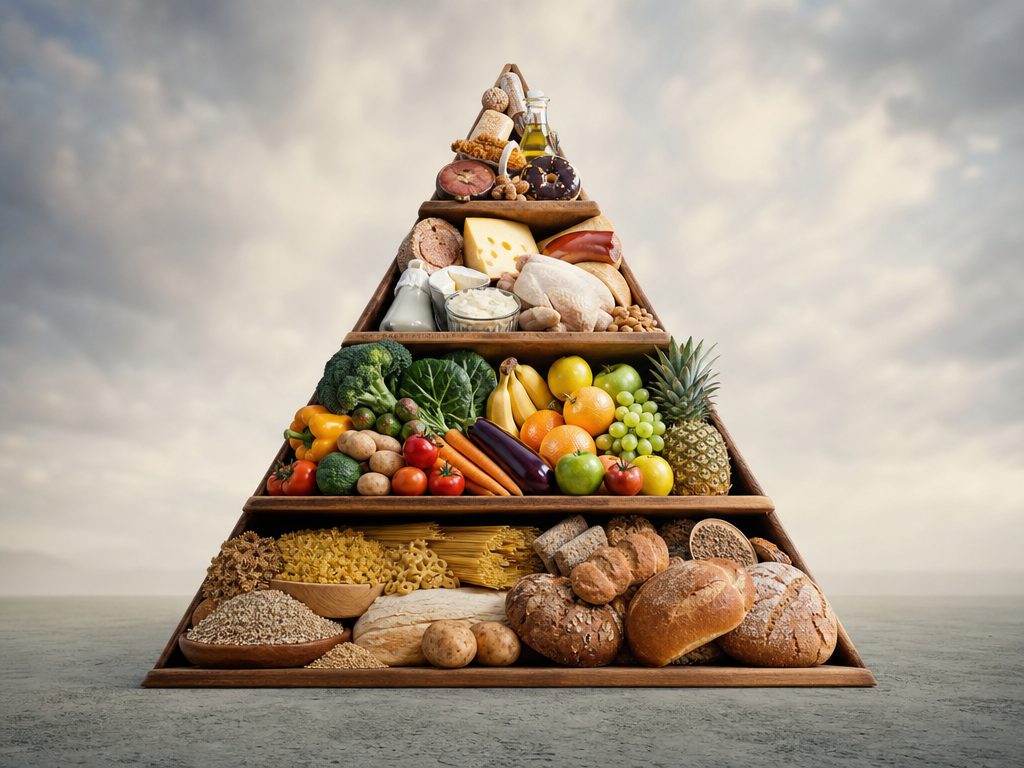
The Evolution of Federal Nutrition Guidance: From 1992 to the 2026 Inverted Pyramid
For decades, federal nutrition guidance in the United States has shaped school lunches, public health campaigns, and household dinner tables. The journey began in earnest with the introduction of the iconic 1992 Food Guide Pyramid, which structured food groups into horizontal tiers. However, this model was far from permanent. In 2005, the USDA replaced it with MyPyramid, a vertical-striped graphic that introduced physical activity but was widely criticized for being confusing and abstract. By 2011, the government pivoted to MyPlate, a simplified, plate-based visual designed to make portion control intuitive.
The most dramatic shift in federal nutrition policy occurred on January 7, 2026, when the U.S. Department of Agriculture (USDA) and the U.S. Department of Health and Human Services (HHS) officially retired MyPlate and launched the "New Food Pyramid" as part of the Dietary Guidelines for Americans, 2025–2030. This new model literally flips the classic pyramid on its head, presenting an inverted triangle that prioritizes whole, nutrient-dense foods. To explore the current guidelines and access official resources, consumers are directed to the newly launched portal at realfood.gov.
Sources: realfood.gov, www.usda.gov, www.hhs.gov
The Carb-Heavy Foundation Problem of the Classic 1992 Pyramid
At the base of the classic 1992 Food Guide Pyramid sat the bread, cereal, rice, and pasta group, with a staggering recommendation of 6 to 11 daily servings. By placing carbohydrates at the absolute foundation of the American diet, the pyramid made a critical scientific error: it failed to distinguish between highly refined grains and fiber-rich whole grains. In the eyes of the 1992 graphic, a slice of highly processed white bread was visually equivalent to a serving of steel-cut oats.
Consuming large quantities of refined carbohydrates triggers rapid spikes in blood sugar, forcing the pancreas to produce excess insulin. Over time, this chronic demand on the endocrine system can lead to insulin resistance, metabolic dysfunction, and weight gain. Because the visual guide did not warn against processed white flour and added sugars within its foundational tier, millions of consumers built their daily diets on foods that contributed to the very chronic diseases—such as type 2 diabetes and cardiovascular illness—that public health guidelines were meant to prevent.
Sources: www.cdc.gov, realfood.gov
The Demonization of Dietary Fats: A Costly Miscalculation
Another major drawback of the 1992 pyramid was its sweeping demonization of all dietary fats. The classic model placed all fats, oils, and sweets in the tiny, restricted tip of the triangle, accompanied by the blanket instruction to "use sparingly." This created a powerful public perception that all dietary fat was inherently harmful to cardiovascular health and weight management.
In reality, nutritional science has long established that healthy fats—such as monounsaturated and polyunsaturated fats found in extra virgin olive oil, avocados, wild-caught seafood, nuts, and seeds—are essential for human survival. They are critical for hormone production, brain function, cellular integrity, and the absorption of fat-soluble vitamins. By failing to separate these beneficial lipids from artificial trans fats and highly processed seed oils, the pyramid steered the public toward "low-fat" and "fat-free" processed foods. To compensate for the lost flavor and texture of fat, food manufacturers loaded these products with added sugars and refined starches, inadvertently fueling a metabolic health crisis.
Sources: www.cdc.gov, realfood.gov
The Static Plate vs. Dynamic Energy: Neglecting Lifestyle and Activity
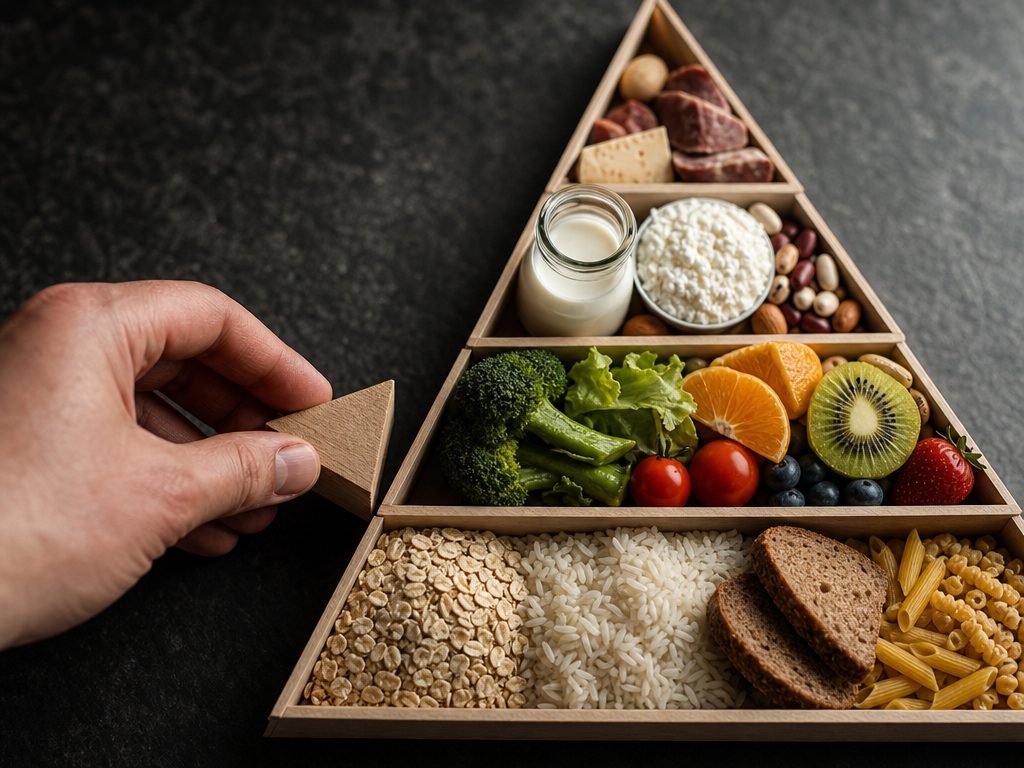
A static food illustration, by its very nature, struggles to capture the dynamic relationship between diet and energy expenditure. The original 1992 pyramid focused entirely on what went onto the plate, completely ignoring the role of physical activity in metabolic health. While the short-lived 2005 MyPyramid attempted to address this by depicting a figure climbing stairs up the side of the triangle, subsequent models like MyPlate largely sidelined the lifestyle component.
Modern health guidelines emphasize that nutrition cannot be separated from movement. Energy balance—the relationship between the calories consumed and the energy expended through daily movement, metabolic processes, and structured exercise—is highly individualized. A sedentary office worker requires a vastly different macronutrient profile and caloric intake than an active athlete or a manual laborer. By presenting a rigid, one-size-fits-all serving recommendation without contextualizing it within an individual's physical activity level, the classic pyramid failed to provide a realistic framework for long-term weight management and metabolic vitality.
Sources: www.cdc.gov, realfood.gov
A Critical Blindspot: Overlooking Food Safety, Quality, and Contamination
While federal dietary models focus heavily on broad food categories and portion sizes, they historically suffer from a critical blindspot: they fail to address food quality, preparation, and safety. Knowing how many servings of fruits and vegetables to consume is of little practical use if those foods are contaminated, improperly handled, or heavily processed.
For instance, raw produce can carry microscopic parasites such as Cyclospora, or bacterial pathogens like E. coli and Salmonella, which cause severe foodborne illnesses. Consumers must look beyond basic food groups to educate themselves on proper food safety practices, including thorough washing techniques, safe cooking temperatures, and cross-contamination prevention. Furthermore, staying informed about active food recall alerts issued by agencies like the FDA is crucial for protecting household health. A healthy diet is built not just on the right categories of food, but on clean, safe, and high-quality ingredients.
Sources: www.fda.gov, www.cdc.gov
The MyPlate Era (2011–2026): A Step Forward with Its Own Limitations
Introduced in 2011, the MyPlate model represented a major shift away from the abstract serving sizes of the pyramid. By depicting a simple dinner plate divided into four sections—fruits, vegetables, grains, and protein—alongside a cup representing dairy, MyPlate made portion control immediately actionable. It successfully encouraged Americans to fill half their plates with colorful fruits and vegetables, a simple message that nutrition educators widely praised.
Despite its practical utility, MyPlate carried its own set of limitations. Like its predecessors, the plate graphic did not adequately distinguish between high-quality, minimally processed foods and highly processed alternatives. A fried chicken nugget and a grilled chicken breast both fit into the "protein" quadrant, while sweetened canned peaches and fresh berries both occupied the "fruit" section. This lack of emphasis on food processing and ingredient quality ultimately led federal agencies to seek a more comprehensive model that could address the modern epidemic of ultra-processed food consumption.
Sources: realfood.gov, www.usda.gov
The 2026 Dietary Guidelines: Flipping the Pyramid on Its Head
On January 7, 2026, the USDA and HHS unveiled a historic reset of U.S. nutrition policy with the release of the Dietary Guidelines for Americans, 2025–2030. Spearheaded by federal leadership, including HHS Secretary Robert F. Kennedy Jr. and USDA Secretary Brooke Rollins, this update retired MyPlate and introduced the "New Food Pyramid." This model is visually striking because it is completely inverted, featuring its widest, most prominent section at the top and tapering down to a narrow point at the bottom.
The core philosophy of this 2026 update is encapsulated in a simple, powerful tagline: "Eat real food." The guidelines represent an urgent federal response to a national health emergency, noting that nearly 90% of healthcare spending in the United States goes toward treating chronic diseases, many of which are directly linked to diet and lifestyle. By flipping the pyramid, the government aims to shift public focus away from calorie-counting and rigid portion sizes, placing the emphasis squarely on the consumption of whole, minimally processed, nutrient-dense foods.
Sources: realfood.gov, www.hhs.gov, www.usda.gov
Deconstructing the Inverted Pyramid: Protein, Full-Fat Dairy, and Grains
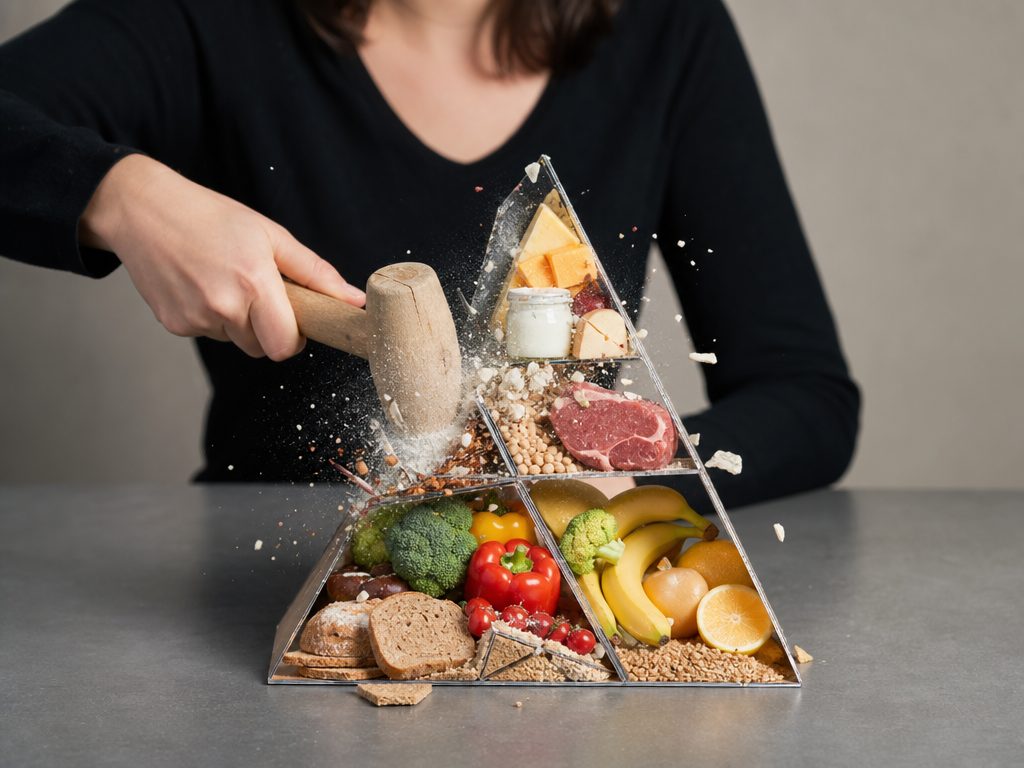
The structural layout of the 2026 inverted pyramid represents a complete reversal of the 1992 model. At the broad, dominant top of the inverted triangle sit high-quality proteins, healthy fats, vegetables, and fruits. The guidelines place a heavy emphasis on prioritizing protein at every meal, recommending a target of 1.2 to 1.6 grams of protein per kilogram of ideal body weight per day. This protein can come from a variety of animal sources—such as eggs, poultry, seafood, and red meat—as well as plant-based sources like legumes, nuts, and seeds.
In another major departure from previous decades, full-fat dairy products with no added sugars (such as whole milk, Greek yogurt, and real cheese) are actively encouraged as excellent sources of protein, healthy fats, and essential minerals. Meanwhile, fiber-rich whole grains have been moved to the narrow tip at the bottom of the inverted pyramid, with a recommended target of just 2 to 4 servings per day. Highly processed, refined carbohydrates and added sugars are explicitly discouraged, representing a major policy shift designed to stabilize blood sugar and promote satiety.
Sources: realfood.gov, www.usda.gov
The Scientific Controversy: Saturated Fat Contradictions and Expert Critiques
While the 2026 guidelines have been celebrated by some as a common-sense return to whole foods, they have also sparked significant debate and controversy within the scientific community. Prominent nutrition experts, including Dr. Frank Hu of the Harvard T.H. Chan School of Public Health, and professional organizations like the Academy of Nutrition and Dietetics, have raised concerns about apparent contradictions between the visual pyramid and the underlying scientific text.
The primary point of contention lies in the treatment of saturated fats. The written 2025–2030 guidelines maintain the longstanding recommendation to limit saturated fat intake to less than 10% of total daily calories. However, the visual inverted pyramid prominently features foods high in saturated fats—such as steak, butter, and full-fat cheese—at its widest top section. Critics argue that this visual prominence may mislead consumers into overconsuming saturated fats, potentially increasing LDL cholesterol and cardiovascular risks. Additionally, some experts express concern that downplaying whole grains and fiber could negatively impact digestive health and the gut microbiome, highlighting the ongoing tension between policy design and consensus-based nutrition science.
Sources: realfood.gov, www.hhs.gov
Navigating Changing Guidelines: A Checklist for Personalized Nutrition
Because federal nutrition guidelines, scientific consensus, and official programs are subject to change as new clinical research emerges, consumers should treat any visual model as a flexible framework rather than an absolute, permanent rule. To stay informed on the latest official updates, individuals should directly consult authoritative government portals such as realfood.gov and fda.gov.
When designing a dietary pattern that supports your unique biology, lifestyle, and health goals, consider the following practical steps:
• Prioritize Whole Foods: Focus on minimally processed, single-ingredient foods that do not contain added sugars, excess sodium, or artificial additives.
• Tailor Protein and Energy Intake: Adjust your daily protein and caloric intake based on your age, sex, weight, and physical activity level.
• Emphasize Food Safety: Practice proper food handling, wash raw produce thoroughly, and monitor active FDA recall alerts.
• Consult the Experts: Work with a registered dietitian or healthcare provider to customize a nutrition plan that addresses your specific metabolic needs, food sensitivities, or underlying health conditions.
Educational information only; it is not medical or veterinary advice. Consult an appropriately licensed professional for decisions about care.
Sources: realfood.gov, www.fda.gov