The Tripartite Model of Canine Cognition
To truly understand canine intelligence, we must move beyond the simplistic notion of a "good dog" who sits on command. In his landmark 1994 book, *The Intelligence of Dogs*, Dr. Stanley Coren, a Professor Emeritus of Psychology at the University of British Columbia, established a tripartite framework that remains the gold standard for evaluating canine minds. This model divides intelligence into three distinct dimensions: instinctive intelligence, adaptive intelligence, and working/obedience intelligence. Instinctive intelligence refers to a dog's innate, genetically programmed ability to perform tasks they were historically bred for, such as herding, pointing, or retrieving. Adaptive intelligence represents a dog's individual capacity to solve novel problems, learn from their environment, and bypass obstacles without human intervention. Finally, working and obedience intelligence measures a dog's rate of learning from human instruction and their reliability in executing those commands under pressure.
While Coren's famous breed rankings primarily focus on working and obedience intelligence—compiled from evaluations by hundreds of professional obedience judges—modern veterinary behaviorists emphasize that this is only one piece of the cognitive puzzle. A highly independent breed, such as a Siberian Husky or an Afghan Hound, may rank low in obedience because they lack the desire to please humans, yet they often possess extraordinary adaptive intelligence, easily figuring out how to open complex latches or escape secure enclosures. When choosing or training a dog, owners must recognize that a "smart" dog is not necessarily an easy dog; rather, they are dogs with complex cognitive profiles that require tailored mental outlets. Understanding these distinctions helps handlers avoid the trap of labeling a dog "stubborn" when they are simply displaying high adaptive intelligence coupled with low working compliance.
Sources: en.wikipedia.org, www.akc.org
The Border Collie: The Hyper-Focused Workaholic
Consistently ranked as the most intelligent dog breed in the world, the Border Collie is the undisputed king of working and obedience intelligence. Developed in the border country between Scotland and England, these dogs were bred to herd sheep under demanding conditions, requiring them to make split-second decisions at great distances from their handlers. Their herding style is famous for "the eye"—an intense, hypnotic gaze used to control and intimidate livestock without physical contact. This intense focus is a double-edged sword; in a domestic setting, a Border Collie's brain is constantly scanning for patterns, and without a structured job, they will readily herd children, vacuum cleaners, or moving shadows.
The true depth of the Border Collie's cognitive capacity was demonstrated by Chaser, a female Border Collie trained by Dr. John W. Pilley, Professor Emeritus of Psychology at Wofford College. Over three years of intensive, play-based training, Chaser learned and retained the proper-noun names of 1,022 individual toys, establishing the largest tested memory of any non-human animal. More impressively, Chaser demonstrated an understanding of syntax, distinguishing between commands with reversed prepositional and direct objects, such as "to ball take Frisbee" (take the Frisbee to the ball) and "to Frisbee take ball" (take the ball to the Frisbee). She also utilized inferential reasoning by exclusion. When presented with a group of familiar toys alongside one novel toy and asked to retrieve an unfamiliar name, Chaser deduced through process of elimination that the new name must belong to the new toy—a cognitive feat previously thought unique to young children. Owning a Border Collie means living with this level of cognitive intensity daily.
Sources: www.akc.org, en.wikipedia.org
The Poodle: The Versatile Water Retriever and Problem Solver
Often misunderstood due to their elaborate show clips and association with high-society fashion, the Poodle is actually one of the most athletic, versatile, and intellectually capable breeds in existence, ranking second overall in Coren's intelligence hierarchy. Originally bred in Germany (not France) as water retrievers, the name "Poodle" derives from the German word *pudel* or *pudeln*, which means "to splash [in water]". Standard Poodles possess a rugged physical stamina paired with a highly analytical mind. Their famous haircuts were not designed for aesthetics, but rather for strict functionality. Shaving the hindquarters and legs reduced drag and prevented the heavy, wet coat from weighing the dog down while swimming. Leaving thick puffs of hair around the chest and joints protected vital organs from freezing water and shielded sensitive joints from cold-induced ailments like rheumatism.
Poodles of all sizes—Standard, Miniature, and Toy—exhibit exceptional cognitive flexibility and social sensitivity. They are master observers of human behavior, capable of reading subtle shifts in body language, facial expressions, and vocal tones. This high emotional intelligence makes them incredibly easy to train but also highly sensitive to household stress. Unlike breeds that require repetitive drills, Poodles often grasp a new concept in just a few repetitions and can quickly grow bored of rote obedience. They excel in activities that require creative problem-solving, such as scent detection, complex trick training, and agility courses. To keep a Poodle mentally satisfied, owners must engage them in interactive games that challenge both their physical coordination and their analytical minds.
Sources: en.wikipedia.org, www.akc.org
The German Shepherd: Tactical Thinkers and High-Drive Protectors
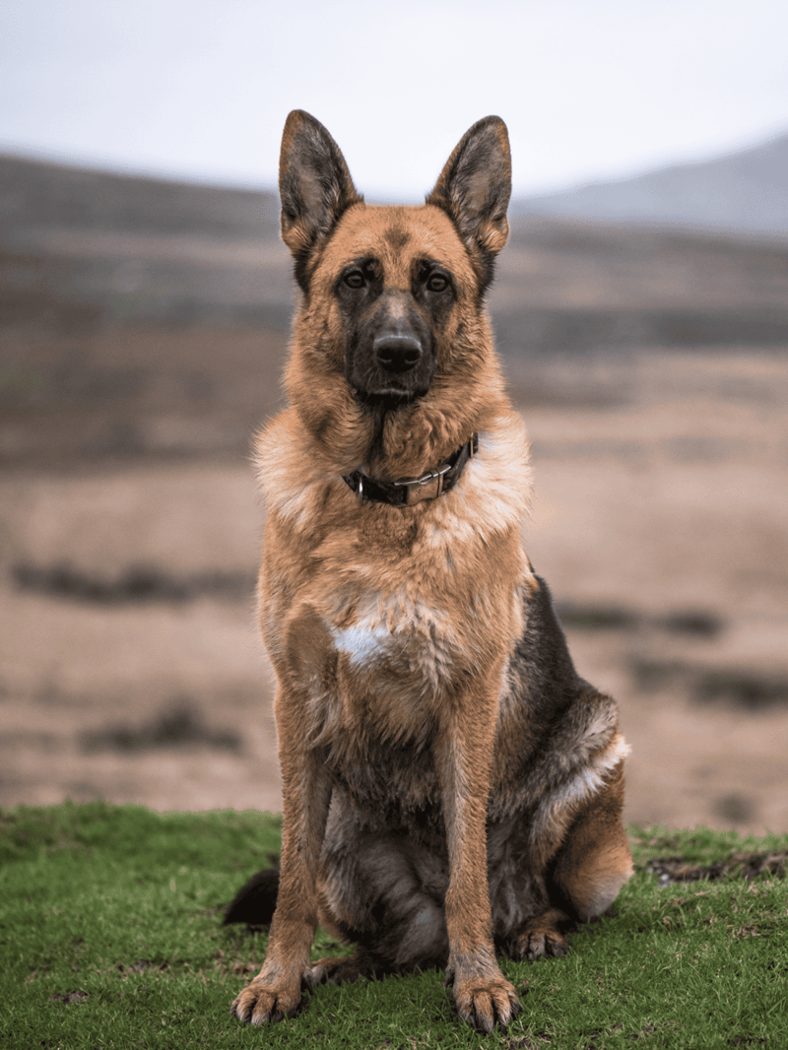
The German Shepherd Dog (GSD) represents the gold standard for working utility breeds worldwide. Developed in the late 19th century by Captain Max von Stephanitz, who sought to create the ultimate working dog, the GSD's intelligence is defined by adaptability, courage, and an extraordinary capacity for multi-step task chaining. Von Stephanitz co-founded the *Verein für Deutsche Schäferhunde* (SV) in 1899 to standardize the breed. To preserve the breed's working temperament, tracking ability, and physical endurance against careless breeding, the SV developed the Schutzhund test (now internationally standardized as IGP, formerly IPO) in the early 1900s. This breed does not just learn commands; they learn systems. This is why they are the premier choice for military, police, search-and-rescue, and medical detection work globally. They possess a high level of "biddability"—the willingness to work closely with a human partner—combined with the physical capability to execute demanding tasks under extreme stress.
However, the cognitive needs of a German Shepherd vary significantly between working lines (bred for high drive and intensity) and show lines (bred for conformation and a more relaxed temperament). Working-line GSDs require a structured lifestyle with clear boundaries and daily mental "missions." Without a clear sense of purpose, their natural protective instincts and high drive can degrade into hyper-vigilance, reactivity, or severe separation anxiety. They thrive in structured training systems like IGP, which tests tracking, obedience, and protection work. For the average owner, keeping a German Shepherd mentally balanced requires daily obedience drills, scent-tracking games, and tasks that require them to carry out sequential commands, such as retrieving specific items by name.
Sources: www.akc.org

Golden Retrievers and Labradors: The Masters of Social and Emotional Intelligence
While Golden Retrievers and Labrador Retrievers are frequently celebrated as the ultimate family companions, their high rankings in Coren's intelligence scale (fourth and seventh, respectively) are often overlooked in discussions of pure cognitive power. The intelligence of these retriever breeds is deeply rooted in social cognition and bidirectional communication. Unlike herding breeds, which can be highly independent, retrievers have been selectively bred for generations to work in close partnership with hunters, requiring them to mark fallen game at great distances, remember multiple drop locations, and take directional hand signals from their handlers.
This evolutionary background has gifted them with an unparalleled ability to read human micro-expressions and emotional states. This high emotional intelligence, combined with a low arousal threshold and an innate desire to please, makes them the undisputed leaders in service work, including guide dogs for the visually impaired, medical alert dogs, and therapy animals. They are capable of learning highly complex, non-instinctive tasks, such as opening doors, turning on light switches, retrieving dropped keys, and even detecting changes in blood sugar or oncoming seizures. Training a retriever is highly rewarding because they respond exceptionally well to positive reinforcement, but owners must remember that their social minds require active engagement; leaving a retriever isolated in a backyard is a recipe for severe psychological distress and destructive chewing.
Sources: www.akc.org
The Overlooked Intellectuals: Dobermans, Shetland Sheepdogs, and Papillons
When discussing the smartest dog breeds, the spotlight often remains fixed on Border Collies, German Shepherds, and Poodles. However, several other breeds consistently rank in Coren's top ten and possess fascinating cognitive profiles. The Doberman Pinscher, ranking fifth, was engineered in late 19th-century Germany by a tax collector named Louis Dobermann, who needed a loyal, highly intelligent protector. Dobermans possess a sharp, analytical mind that excels at threat assessment and spatial awareness. They are incredibly fast learners who require consistent, positive-reinforcement training to channel their intense focus and prevent them from becoming overly protective or anxious.
The Shetland Sheepdog, ranking sixth, is a miniature herding powerhouse from the rugged Shetland Islands. "Shelties" possess an extraordinary vocal vocabulary and a keen sensitivity to environmental changes. They are highly attuned to their owner's moods and excel in competitive obedience and agility, though their high intelligence means they can easily develop obsessive-compulsive behaviors, like chasing light reflections, if their minds are underutilized. Finally, the Papillon, ranking eighth, proves that cognitive genius is not limited to large working breeds. This tiny toy spaniel possesses the brain of a working dog in a pocket-sized body. Papillons are highly active, curious, and exceptionally skilled at learning complex tricks and navigating miniature agility courses, defying the stereotype of the passive lapdog.
Sources: www.akc.org, en.wikipedia.org
The Double-Edged Sword: The Psychological Burden of High Canine Intelligence
While the prospect of owning a canine genius is highly appealing, it carries significant psychological risks for both the dog and the owner. Highly intelligent dogs process their environment with extreme sensitivity, meaning they learn both desirable and undesirable behaviors with astonishing speed. In canine behavioral science, this phenomenon is widely referred to as "single-event learning" or "single-exposure learning" (often called "one-trial learning"). It occurs when a single highly intense, startling, or incredibly rewarding event causes immediate, permanent behavioral modification. If a clever dog figures out just once that nudging a specific cabinet door yields a bag of treats, or that whining at a particular pitch causes their owner to stand up, that behavior becomes deeply ingrained. Owners of smart dogs must be hyper-vigilant about their own consistency, as these dogs are master opportunists who will quickly exploit any loophole in household rules.
Furthermore, a lack of mental stimulation in highly intelligent breeds does not simply result in a bored dog; it can lead to severe clinical psychological disorders. When a high-drive, intelligent brain is left in a state of sensory deprivation, it begins to misfire. This often manifests as stereotypic or compulsive behaviors, such as continuous tail-chasing, shadow-staring, flank-sucking, or self-mutilation through repetitive licking. It can also lead to profound separation anxiety, hyper-reactivity, and destructive behaviors like systematically dismantling drywall or chewing through solid wood doors. For these breeds, mental enrichment is not an optional luxury or a weekend activity; it is a fundamental veterinary health requirement.
Sources: vcahospitals.com
Designing a Canine Cognitive Enrichment Program
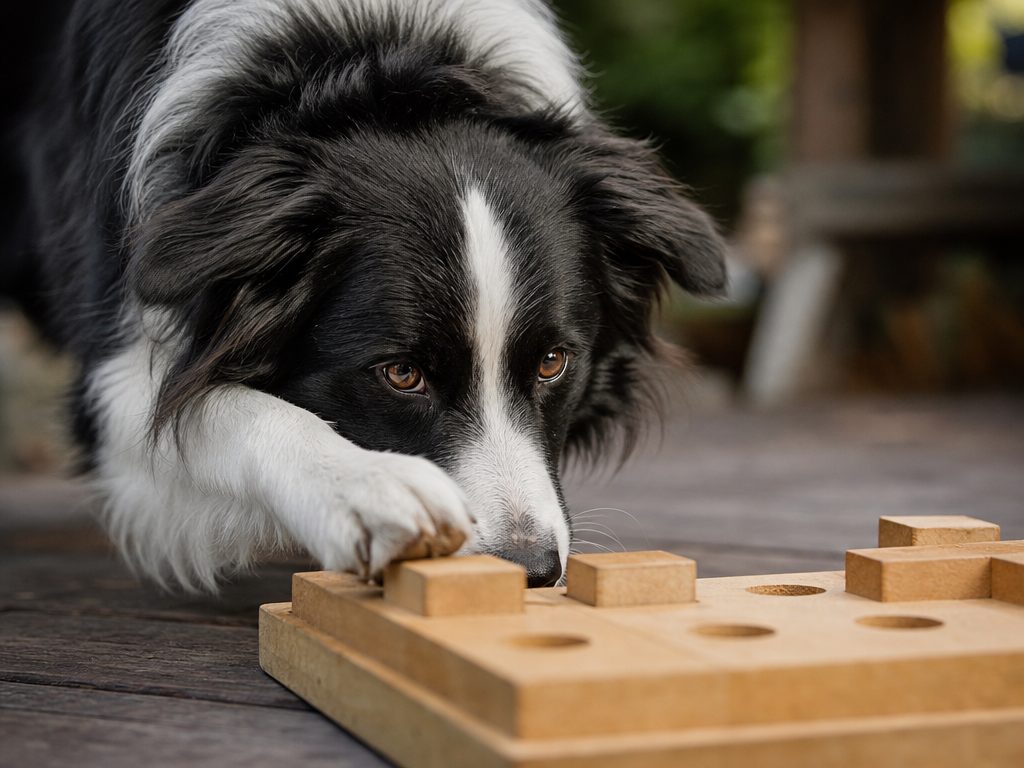
To prevent the psychological fallout of boredom, owners of intelligent dogs should implement a structured, multi-modal canine enrichment program. Environmental enrichment should not be viewed as a single activity, but rather as a diverse suite of stimuli categorized into five distinct domains: sensory, food-based, physical, social, and cognitive. Sensory enrichment involves engaging the dog's powerful olfactory, auditory, and visual senses. This can be achieved by introducing novel scents (such as diluted essential oils like lavender or chamomile, or wild animal dander) to their environment, or playing species-specific calming music.
Food-based and cognitive enrichment are highly effective at burning mental energy. Rather than feeding your dog from a standard bowl, make every meal a problem-solving event. Utilize snuffle mats, which mimic natural foraging behaviors, or interactive puzzle toys that require the dog to slide levers, spin wheels, and lift cups to access their kibble. A highly recommended, standard DIY cognitive enrichment game officially endorsed by major animal welfare organizations like the ASPCA is the "muffin tin puzzle." To set this up, place high-value kibble or treats in the cups of a standard baking tin, then cover each cup completely with a tennis ball. The dog must use their nose and paws to figure out how to lift or roll the balls away to access the food. Always supervise your dog during these activities to prevent them from chewing and swallowing plastic or rubber components, and gradually increase the difficulty of the puzzles to keep their analytical minds challenged.
Sources: www.aspca.org
Advanced Training Protocols: Shaping, Chaining, and Concept Training
Traditional obedience training often relies on "luring"—using a treat to guide a dog into a position. While effective for basic commands, luring does not fully engage a smart dog's problem-solving capabilities. To truly challenge a highly intelligent canine, owners should transition to advanced training protocols such as shaping, chaining, and concept training. Shaping involves reinforcing gradual approximations of a target behavior without any physical guidance or luring. For example, if you want to teach your dog to close a door, you first reward them for looking at the door, then for moving toward it, then for touching it with their nose, and finally for pushing it hard enough to click shut. This process forces the dog to actively think, experiment, and offer behaviors, which is incredibly tiring and mentally satisfying.
Chaining is the process of linking multiple individual behaviors together into a seamless sequence. Backward chaining is particularly effective: you teach the final step of the sequence first, then the second-to-last, and so on. This ensures that the dog is always moving toward a behavior they know highly well, boosting their confidence and focus. Concept training represents the pinnacle of canine education. This includes teaching the "Do as I Do" imitation protocol, developed by ethologist and researcher Dr. Claudia Fugazza of Eötvös Loránd University in Budapest. This method relies on a dog's natural capacity for social learning to copy human actions on the cue "Do it!". It can also involve teaching object discrimination based on abstract concepts, such as sorting toys by color, size, or material. These advanced protocols build a deep cognitive partnership between dog and handler, transforming training from a series of commands into a two-way intellectual dialogue.
Sources: vcahospitals.com
The Owner's Diagnostic Checklist: Is Your Dog Bored or Anxious?
It is common for owners of highly intelligent breeds to mistake clinical anxiety or compulsive disorders for simple boredom. While both issues require intervention, their underlying causes and treatment protocols differ significantly. To help you differentiate between a dog who simply needs more mental stimulation and one who is suffering from a clinical behavioral pathology, consult the diagnostic checklist below.
| Behavior / Symptom | Boredom Indicators | Anxiety / Compulsive Indicators |
| :--- | :--- | :--- |
| **Destructive Behavior** | Occurs primarily when the dog is left alone for long periods; targeted at interesting items like trash cans, shoes, or pillows. | Occurs immediately upon or shortly after owner departure; targeted at exit points like door frames, window sills, or crates. |
| **Vocalizations** | Intermittent barking or howling, often characterized by a repetitive, "attention-seeking" tone. | Continuous, high-pitched whining, barking, or howling accompanied by physiological signs of distress (panting, drooling). |
| **Repetitive Actions** | Pacing or digging that stops immediately when a human offers a toy, treat, or training session. | Compulsive pacing, tail-chasing, or shadow-staring that the dog cannot easily be distracted from, even with high-value rewards. |
| **Response to Enrichment** | Readily engages with puzzle toys, snuffle mats, or scent games, showing calm relaxation afterward. | Ignores food puzzles entirely; remains hyper-vigilant, panting, or pacing despite the presence of high-value enrichment. |
If your dog's behaviors align more closely with the anxiety and compulsive indicators, simple enrichment toys will not solve the issue. In these cases, it is critical to consult with a veterinary behaviorist or a Certified Applied Animal Behaviorist (CAAB) to develop a comprehensive behavior modification plan, which may include targeted desensitization, counter-conditioning, or temporary pharmaceutical support.
Sources: vcahospitals.com, www.aspca.org
Professional Outlets and Canine Sports
For many high-intelligence, high-drive breeds, domestic enrichment games are only a stepping stone. To truly satisfy their cognitive and physical needs, transitioning to formal canine sports can be highly transformative. Sports like Agility, which requires a dog to navigate a complex obstacle course of jumps, tunnels, and weave poles at high speed, challenge a dog's spatial awareness, physical coordination, and ability to take rapid directional cues from a distance. AKC Scent Work, modeled after professional detection dog training, taps into a dog's most powerful sensory system, teaching them to locate specific target odors in varied environments. The four official target essential oils used progressively in AKC Scent Work trials are Birch (*Betula lenta*), Anise (*Pimpinella anisum*), Clove (*Eugenia caryophyllata*), and Cypress (*Cupressus sempervirens*).
Other excellent options include Rally Obedience, which involves navigating a course of designated obedience tasks with your dog, and Herding trials for pastoral breeds. If you decide to transition from home games to formal competitions, it is essential to verify the specific entry rules, safety standards, and pricing with your local kennel club or national organizations like the American Kennel Club (AKC) or United Kennel Club (UKC), as these guidelines and fee structures are subject to change over time. Always ensure your dog has undergone a thorough veterinary physical examination before starting any high-impact sport to rule out underlying orthopedic issues, such as hip dysplasia, which are common in several large intelligent breeds.
Sources: www.akc.org