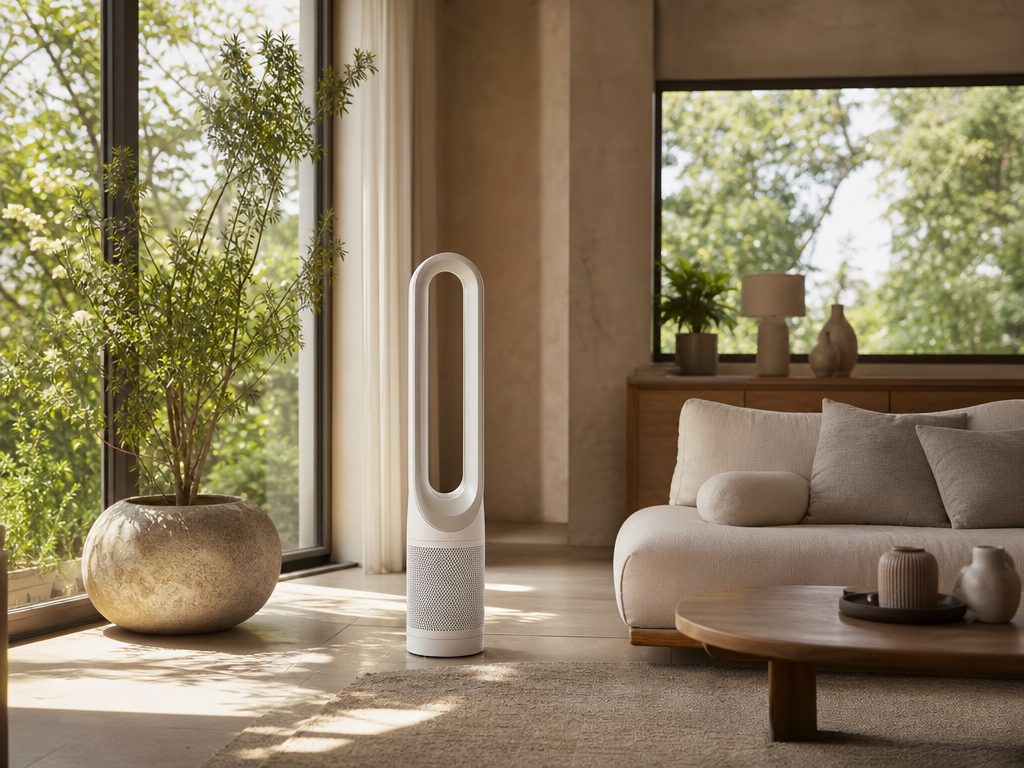
Introduction: The Evolution of Home Climate Control
Traditional fans have remained largely unchanged for over a century. From heavy metal desk fans to wobbling ceiling fixtures, the basic mechanism has always relied on exposed, spinning blades to chop and push air forward. While functional, these designs introduce persistent issues: choppy airflow, mechanical noise, dust accumulation, and safety hazards for curious fingers or paws.
The emergence of bladeless cooling fans—pioneered by Dyson's Air Multiplier technology—marked a paradigm shift in residential climate control. By hiding the moving parts and utilizing advanced fluid dynamics, these devices deliver a continuous, smooth stream of air. Today, bladeless fans are no longer just futuristic design statements; they are highly engineered, multi-functional appliances designed to optimize indoor air quality, safety, and energy efficiency in modern smart homes.
Sources: www.dyson.com
The Physics of Airflow: Inducement, Entrainment, and the Coandă Effect
To the untrained eye, a bladeless fan seems to defy physics, projecting a powerful breeze through an empty hoop. In reality, the technology relies on a sophisticated combination of fluid dynamics: inducement, entrainment, and the Coandă effect. The process begins in the base, where an internal impeller draws in ambient air and forces it upward into the hollow, ring-shaped loop amplifier.
The air is then channeled through a continuous, micro-thin slit (typically between 1.0 mm and 2.0 mm wide) running along the inner edge of the hoop. This narrow exit acts as a nozzle, dramatically accelerating the air. As the high-velocity air exits the slit, it encounters a curved, airfoil-shaped ramp angled outward at approximately 15 degrees. Due to the Coandă effect—the physical tendency of a fluid jet to cling to an adjacent curved surface—the air follows this outward slope, creating a localized low-pressure zone in the center of the ring.
According to Bernoulli's principle, air naturally moves from high-pressure to low-pressure areas. This pressure differential draws air from behind the fan forward through the hoop (a process called inducement). Simultaneously, the high-speed stream drags the surrounding air along with it (known as entrainment). Together, these forces multiply the initial volume of air drawn into the base by up to 15 times, creating a smooth, uninterrupted breeze without the choppy, buffeting sensation of physical blades.
Sources: arxiv.org
Under the Hood: Why Brushless DC (BLDC) Motors Rule Bladeless Technology
The heart of any high-performance bladeless fan is its motor. While traditional household fans historically relied on single-phase AC induction motors (such as Permanent Split Capacitor, or PSC, motors), modern premium bladeless fans utilize Brushless Direct Current (BLDC) motors. To understand the efficiency gap, it is important to look at motor physics.
AC induction motors are brushless by design, but they operate asynchronously. They must induce a magnetic field in the rotor through electromagnetic induction, which creates "slip" (the rotor lags behind the rotating magnetic field) and generates significant heat losses. A typical AC induction fan draws between 70W and 80W at high speeds, converting a substantial portion of that energy into wasted heat rather than kinetic airflow.
In contrast, BLDC motors utilize permanent magnets (often high-grade neodymium magnets) on the rotor and an electronic controller to sequentially energize the stator coils. Because the magnetic field is permanently present on the rotor, no energy is wasted inducing a field. BLDC motors operate synchronously with zero slip, achieving motor efficiencies of 85% to 95% compared to the 60% to 75% typical of small AC induction motors. This engineering difference allows a BLDC-driven bladeless fan to deliver equivalent or superior airflow while drawing only 25W to 35W at maximum speed, and as little as 6W on low settings. Furthermore, the electronic commutation of BLDC motors provides exceptionally precise speed control across a wide range of settings.
Sources: www.youtube.com
Acoustic Engineering: How Bladeless Fans Achieve Whisper-Quiet Operation
A major complaint about traditional fans is the rhythmic, chopping noise created as physical blades slice through the air. This turbulence creates a high-frequency buffeting sound that can disrupt sleep, concentration, and virtual meetings. Bladeless fans achieve near-silent operation by eliminating these external blades and optimizing internal aerodynamics. Because the air is projected as a continuous, unbroken stream, the output is a smooth, low-frequency hum that acts as natural white noise.
To minimize internal noise, manufacturers employ advanced acoustic engineering. The base of a premium bladeless fan often contains Helmholtz resonators—acoustic cavities designed to trap and neutralize specific sound frequencies generated by the high-speed impeller. Additionally, the air paths inside the loop are aerodynamically smoothed to prevent micro-turbulences.
At low speeds (settings 1 to 4), a quality bladeless fan operates at an incredibly quiet 35 to 42 dB(A), which is quieter than a library whisper. At maximum speed (setting 10), the sound level typically rises to 61 to 63 dB(A). While this high-speed setting is audible, the sound is a consistent, rushing "whoosh" rather than the mechanical rattling or chopping associated with traditional pedestal fans.
Sources: www.dyson.com
The Safety and Hygiene Advantage for Modern Households
For households with toddlers, young children, or curious pets, traditional fans present a constant safety hazard. Even with wire grates, small fingers or pet tails can slip through the gaps, leading to painful pinches or injuries. Furthermore, traditional fans are notorious dust magnets. The leading edges of spinning blades accumulate a thick layer of static-charged dust, pet dander, and allergens over time. When turned on, the fan scatters these particles back into the room, aggravating respiratory issues.
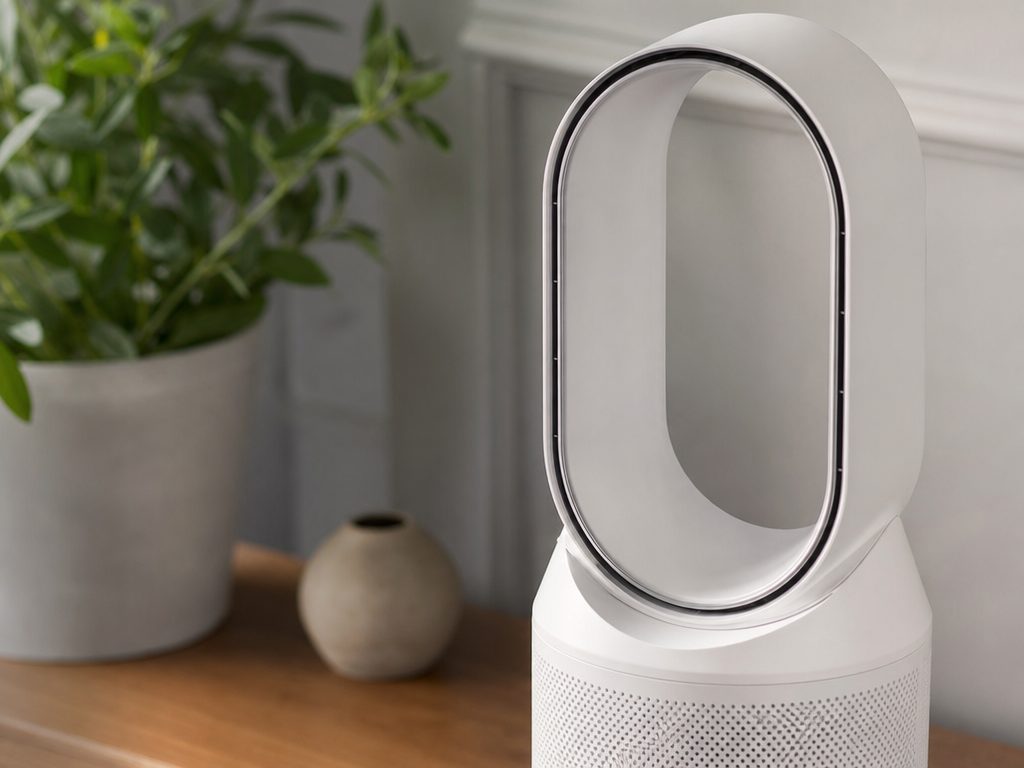
Bladeless fans completely eliminate these hazards. Because the impeller is safely sealed inside the heavy, low-center-of-gravity base, there are no exposed moving parts. Children and pets can touch the loop amplifier safely while the device is in operation.
From a hygiene perspective, the smooth, open geometry of the hoop makes cleaning effortless. There are no grates to unscrew or dusty blades to wipe down individually. A quick swipe with a dry or slightly damp microfiber cloth keeps the unit pristine, preventing the buildup of allergens and ensuring that the projected air remains clean and allergen-free.
Sources: www.dyson.com
Multi-Functional Climate Hubs: Air Purification and Ceramic Heating
While traditional fans only circulate existing air, premium bladeless models frequently serve as year-round, multi-functional climate control centers. By integrating air purification and heating elements, these devices maximize utility and save valuable floor space.
High-end models feature a 360-degree intake base equipped with a sealed HEPA H13 filter and an activated carbon layer. The HEPA filter captures 99.97% of airborne particles as small as 0.3 microns—including pollen, mold spores, bacteria, and fine dust—while the activated carbon layer absorbs volatile organic compounds (VOCs), household odors, and gases. Some advanced models also incorporate Positive Temperature Coefficient (PTC) ceramic plates inside the loop. When winter arrives, the ceramic elements heat up rapidly, and the fan projects warmed, multiplied air across the room.
While these multi-functional units carry a higher upfront cost, they eliminate the need to purchase, store, and maintain three separate appliances (a fan, a space heater, and an air purifier), making them a highly practical investment for compact living spaces.
Sources: www.dyson.com
Smart Home Integration and Energy Efficiency Metrics
Modern bladeless fans are designed to serve as seamless nodes within a smart home ecosystem. Mid-range and premium models feature built-in Wi-Fi and Bluetooth connectivity, allowing users to control and monitor their indoor climate remotely.
Through dedicated smartphone apps, users can view real-time indoor air quality metrics, track filter life, set customized operating schedules, and adjust oscillation angles up to 350 degrees. Integration with smart assistants like Amazon Alexa, Google Assistant, and Apple HomeKit enables hands-free voice commands, allowing you to adjust fan speeds or activate "Night Mode" without leaving your bed.
From an energy perspective, the combination of BLDC motor technology and aerodynamic air multiplication makes these fans exceptionally efficient. A standard 40W bladeless fan running on a medium setting draws roughly 15W to 20W. If operated for 12 hours a day, the fan consumes approximately 0.24 kWh of electricity daily. At an average U.S. residential electricity rate of $0.17 per kWh, running the fan costs less than $1.25 per month. This is a fraction of the operating cost of a traditional 75W AC fan or a portable air conditioner, making it an eco-friendly cooling solution.
Sources: www.youtube.com
A Buyer’s Decision Matrix: Key Criteria for Selecting a Bladeless Fan
When shopping for a bladeless fan, it is easy to get overwhelmed by the variety of models and price points. To find the right unit for your home, evaluate your options against this practical decision matrix:
First, consider room size and placement. For small desks or bedside tables, a compact 10-to-12-inch desk model is ideal. For living rooms, open-concept spaces, or master bedrooms, opt for a tall pedestal or tower model (36 to 42 inches) to ensure the airflow reaches seated or sleeping heights.
Second, evaluate the oscillation range. Basic models offer a fixed 70-to-90-degree oscillation. Premium models feature customizable oscillation angles ranging from 45 to 350 degrees, allowing you to direct airflow precisely where it is needed or distribute it evenly across a large room.
Third, assess your filtration needs. If you suffer from seasonal allergies or have pets, prioritize models with certified HEPA H13 filtration. If you only need cooling, a standard non-purifying model will save you money on both the initial purchase and future filter replacements.
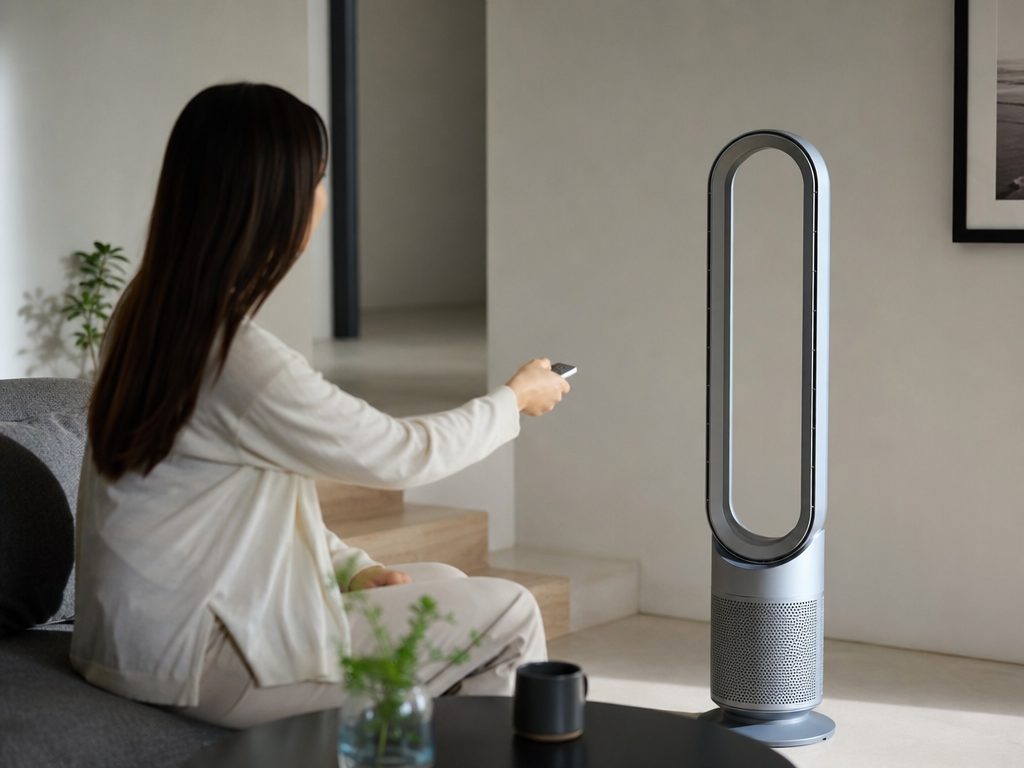
Finally, choose between physical controls and smart connectivity. Ensure the fan fits your lifestyle. If you prefer simple tactile controls, look for models with a physical remote that magnetizes to the top of the unit. If you prefer automation, verify compatibility with your existing smart home hub.
Sources: www.dyson.com
The True Cost of Ownership: Upfront Investment vs. Long-Term Value
While bladeless fans offer undeniable aesthetic and functional benefits, they require a higher initial financial investment than traditional fans. Understanding the true cost of ownership over a 3-to-5-year horizon is essential for making an informed purchase.
First, consider the initial purchase price. Entry-level bladeless fans from budget brands typically cost between $80 and $150. Premium, multi-functional models from industry leaders range from $400 to over $800, depending on the inclusion of HEPA purification and heating capabilities. Because features, pricing, and warranty terms vary widely by brand, always confirm the specific care guidelines and rules for your particular model before purchasing.
Second, account for filter replacement costs. For purifying models, the HEPA and activated carbon filters are consumable parts. Most manufacturers recommend replacing the filter every 12 months (based on 12 hours of daily use). Replacement filters typically cost between $50 and $80. Over five years, filter replacements can add $200 to $400 to the total cost of ownership.
Finally, factor in energy savings. Because a BLDC-driven bladeless fan draws roughly 50% less power than a traditional AC fan, it will yield modest savings on your monthly utility bill. While these savings (approximately $10 to $20 per year per fan) won't fully offset the high upfront cost of a premium model, they do contribute to a lower overall environmental footprint and make the device highly economical to run continuously.
Sources: atomberg.com
Step-by-Step Maintenance and Care Protocol
To ensure your bladeless fan operates at peak efficiency and maintains whisper-quiet acoustics, establish a regular maintenance routine. Because product specifications and warranty terms vary by manufacturer, always consult your specific user manual before performing deep cleaning.
Step 1: Power Down and Unplug. Always disconnect the fan from the electrical outlet before cleaning to prevent electrical hazards.
Step 2: Clean the Loop Amplifier. Wipe the inner and outer surfaces of the hoop with a dry or slightly damp microfiber cloth. Pay close attention to the narrow air-exit slit running along the inside edge. If dust has accumulated inside the slit, use a soft-bristled brush or a can of compressed air to gently dislodge it.
Step 3: Clear the Intake Grates. The air intake vents located around the base of the unit can accumulate dust and pet hair over time. Use the brush attachment of your vacuum cleaner on a low-suction setting to clear the grates. This keeps the internal motor running cool and prevents airflow restrictions.
Step 4: Inspect and Replace Filters. For purifying models, monitor the filter life indicator on the device's screen or app. When replacing the filter, gently wipe down the internal filter chamber with a dry cloth before inserting the new cartridge to ensure a tight, dust-free seal.
Sources: www.dyson.com
Limitations and Trade-offs: When a Traditional Fan Might Still Be Better
Despite their advanced technology, bladeless fans are not a universal solution for every cooling scenario. Understanding their limitations will help you manage expectations and avoid buyer's remorse.
First, they offer lower raw airflow (CFM). Traditional pedestal fans and ceiling fans feature large, high-pitch blades that can move massive volumes of air (often measured in thousands of Cubic Feet per Minute, or CFM). Because bladeless fans rely on accelerating air through a narrow slit, their raw CFM is generally lower than that of a large, traditional high-velocity fan. If you need to cool a massive, uninsulated garage or a highly active gym space, a traditional industrial drum fan or a large ceiling fan remains the superior choice.
Second, consider directional focus. The airflow from a bladeless fan is highly focused and directional. While this is excellent for personal cooling, it may not create the broad, room-wide air circulation that a large ceiling fan provides.
Finally, evaluate the upfront cost. For budget-conscious consumers, the high entry price of bladeless technology is a significant barrier. If your primary goal is simply to move air on a budget, a standard $30 box fan remains the most cost-effective tool for the job.
Sources: www.dyson.com