
The Power of Strategic Inaction: Why Doing Less is the Ultimate Climate Hack
Traditional environmentalism often feels like an exhausting marathon of high-effort chores: meticulously sorting multi-layered plastics, scrubbing stubborn peanut butter jars, and paying premium prices for specialized, niche organic products. However, there is a liberating and unexpected twist to modern sustainability: doing less can actually yield far greater environmental benefits. By embracing strategic inaction, you can significantly reduce your carbon footprint while reclaiming your weekends. This shift in perspective transforms sustainability from a guilt-driven obligation into an effortless lifestyle design. Rather than constantly buying new "eco-friendly" gadgets, the lazy green path encourages you to leave things alone, consume less, and let natural systems do the heavy lifting.
To understand the power of strategic inaction, one must examine the concept of the "consumption treadmill." Many well-meaning consumers fall into the trap of purchasing specialized green products—such as bamboo toothbrushes, organic cotton tote bags, and high-tech home composting bins—under the assumption that buying more is the key to saving the planet. In reality, every manufactured item carries an upfront ecological debt from raw material extraction, manufacturing, and global shipping. By choosing not to buy, you avoid this debt entirely. Strategic inaction is not about apathy; it is about recognizing that the most sustainable product is almost always the one that was never manufactured in the first place. This approach is not only highly effective at reducing waste, but it is also inherently sustainable for your mental energy, ensuring you do not burn out on green living.
The "No-Wash" Wardrobe: Extending Fabric Life with Zero Effort
One of the easiest places to practice strategic inaction is in your laundry room. Many of us have been conditioned to toss garments into the hamper after a single, casual wear. However, washing clothes too frequently is incredibly resource-intensive and actively destroys your wardrobe. According to the U.S. Environmental Protection Agency (EPA) and the Energy Star program, water heating consumes roughly 90% of the energy required to operate a standard clothes washer. By simply reducing the frequency of your washes and switching to cold water, you can dramatically cut your household energy consumption. Cold water is highly effective for most everyday laundry loads, especially when paired with modern detergents designed to activate at lower temperatures.
Furthermore, frequent agitation in hot water breaks down fabric fibers, leading to premature wear, color fading, and the shedding of thousands of synthetic microfibers into local waterways. Unless your garments are visibly soiled, sweaty, or stained, they do not need a full wash cycle. Instead, embrace the "air-out" method: hang slightly worn clothes on a dedicated rack or hanger for 24 hours to let them breathe before returning them to your closet. For minor spots, use a damp cloth and a drop of mild soap to spot-clean rather than running a full load. This lazy habit keeps your clothes looking newer for longer, slashes your utility bills, and saves you hours of folding and sorting every week. When you do run a load, ensure it is fully loaded to maximize water and energy efficiency, and consider air-drying items on a drying rack to eliminate the high energy draw of a standard clothes dryer.
Sources: www.energystar.gov
Low-Maintenance Landscaping: The Rise of the "No-Mow" and Native Ground Cover Movement
The traditional American obsession with a pristine, golf-course-style green lawn is a massive drain on time, water, and fossil fuels. Maintaining a monoculture turf grass requires constant mowing, heavy watering, and often the application of synthetic fertilizers and pesticides. A lazy, highly effective alternative is to simply let your lawn grow a bit longer or transition to low-maintenance ground covers. By reducing your mowing frequency to once every two or three weeks, you immediately save fuel and allow local pollinators, like bees and butterflies, to feed on wild clover and dandelions. This minor adjustment helps restore local biodiversity right in your backyard.
If you want to take strategic inaction a step further, consider replacing sections of your lawn with native ground covers or micro-clover. Micro-clover is a low-growing legume that naturally fixes nitrogen in the soil, meaning it requires zero synthetic fertilizers to stay green. It is highly drought-tolerant, rarely needs watering once established, and grows to a maximum height of only a few inches, virtually eliminating the need for a lawnmower. Transitioning to native plants and ground covers creates a self-sustaining ecosystem in your yard, allowing you to spend your summer afternoons relaxing in a hammock rather than pushing a noisy, polluting mower. Before planting, check with your local university extension office or municipal government, as local weed ordinances and homeowners association (HOA) rules vary widely regarding lawn height and alternative ground covers.
Gamifying Your Utility Bills: Turning Energy Conservation Into a Household Challenge
Saving energy does not have to feel like a series of uncomfortable sacrifices; instead, you can turn it into an engaging household competition. Gather your family, roommates, or even challenge your neighbors to lower your home's baseline energy consumption. Start by logging into your utility provider's online portal to establish a baseline of your kilowatt-hour (kWh) usage over the past three months. This baseline gives you a clear target to beat and helps you understand your household's typical energy patterns.
To play, introduce small, reversible adjustments that require minimal effort but yield noticeable results. For example, according to the U.S. Department of Energy, you can save up to 10% a year on heating and cooling by simply turning your thermostat back 7 to 10 degrees Fahrenheit from its normal setting for 8 hours a day. Program your thermostat to make these adjustments automatically while you are asleep or away from home. Track your progress weekly using your utility's digital dashboard. To keep the game exciting, agree that any financial savings generated from the lowered bill will be pooled into a shared reward, such as a favorite takeout dinner, a board game night, or a streaming subscription. This turns resource conservation into a tangible, rewarding game where everyone wins, reinforcing positive environmental habits through immediate, positive feedback.
Sources: www.energy.gov

Passive Energy Slayers: Banishing "Vampire Draw" Without Unplugging Every Cord
Many households are plagued by "energy vampires"—electronic devices and appliances that continuously draw power even when they are turned off or in standby mode. According to the Lawrence Berkeley National Laboratory (LBNL), standby power accounts for roughly 5% to 10% of residential electricity use in the United States, costing the average household more than $100 annually and contributing to millions of tons of unnecessary carbon emissions. Common culprits include televisions, video game consoles, microwave clocks, smart speakers, and phone chargers left plugged into the wall.
While unplugging every single device after use is the most effective solution, it is also highly tedious and unlikely to stick as a long-term habit. The lazy solution is to deploy passive energy-slaying tools. Invest in smart power strips or outlet timers. A smart power strip automatically detects when a primary device (like your television) is turned off and cuts power to all associated secondary devices (like game consoles, soundbars, and streaming sticks). Alternatively, you can use simple outlet timers to cut power to non-essential electronics, like your Wi-Fi router or office setup, during the hours you are asleep. By automating this process, you permanently eliminate standby waste without having to crawl under desks to pull plugs every night. When shopping for these devices, look for those certified by independent testing laboratories to ensure safety and reliability.
Sources: standby.lbl.gov
The "One-In, Two-Out" Decluttering System: Streamlining Your Space Risk-Free
The modern consumer market is flooded with trendy "sustainable" storage containers, bamboo organizers, and reusable home goods. Ironically, buying new items to help you organize or live sustainably often leads to more waste, clutter, and manufacturing emissions. Instead of shopping your way to an organized home, try the "One-In, Two-Out" decluttering game. The rule is simple: whenever you bring a new physical item into your home, you must find two older, unused items to donate, recycle, or repurpose.
To keep this process completely risk-free and reversible, establish a physical "quarantine box" in a closet or garage. When you identify two items to discard, place them inside this box and write the date on the lid. Leave them there for 30 days. If you find yourself needing or missing an item during that month, you can retrieve it immediately without consequence. However, if the 30 days pass and you have not thought about those items once, you can confidently donate or recycle them. This low-stress system prevents impulse buying, gradually declutters your living space, and ensures you only keep items that truly add value to your life. It also shifts your mindset from acquisition to appreciation, helping you break the cycle of constant consumerism.
Micro-Gardening with Kitchen Scraps: The Lazy Window-Sill Science Lab
You do not need a massive backyard, expensive raised beds, or a high-tech hydroponic system to enjoy the satisfaction of growing your own food. In fact, you can turn your kitchen windowsill into a miniature, zero-waste science lab using scraps you would normally throw in the trash. This is a highly engaging, low-effort way to introduce children to the concept of circular systems and food production, requiring almost no upfront financial investment.
To start, take the root base of a bunch of green onions, celery, or romaine lettuce. Instead of tossing them into the compost or garbage, place the root end down in a small, shallow dish of clean water. Keep the dish in a sunny spot on your windowsill and change the water every 48 hours to prevent mold and bacterial growth. Within just a few days, you will see vibrant green shoots emerging from the center of the scrap. While green onions can thrive and be harvested directly from the water dish indefinitely, celery and romaine lettuce will eventually need to be transplanted into a small pot of soil to access essential nutrients for long-term growth. This simple experiment provides a continuous supply of fresh garnishes with almost zero physical labor or garden maintenance.
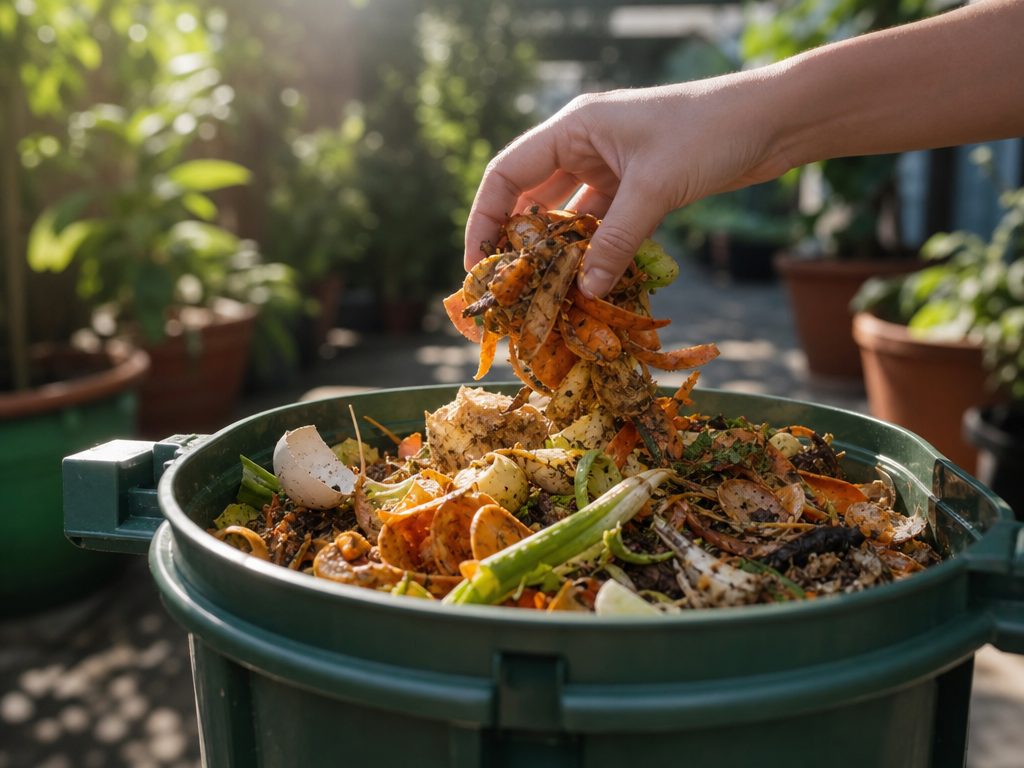
Low-Effort Food Waste Reduction: The "Use-It-Up" Strategy and Freezer Hacks
Food waste is a monumental environmental and financial issue. According to the U.S. Environmental Protection Agency (EPA), over one-third of the food supply in the United States is never eaten, and food waste is the single most common material found in municipal landfills. The EPA estimates that the average family of four wastes nearly $3,000 annually on food that goes straight into the trash. Reducing this waste does not require mastering complex preservation techniques; it simply requires a few lazy kitchen habits that optimize your existing storage.
First, establish an "Eat Me First" box or shelf in your refrigerator. Place items that are nearing their expiration dates, slightly wilted vegetables, or leftovers in this highly visible spot so they are consumed before they spoil. Second, make friends with your freezer. The freezer is the ultimate pause button for fresh food. If you notice bananas turning brown, peel them and toss them into a freezer bag for future smoothies. Keep a "stock bag" in your freezer to collect veggie scraps like onion skins, carrot ends, and celery tops. Once the bag is full, simply simmer the contents in water for an hour to create a rich, flavorful vegetable broth. These passive habits keep money in your pocket and divert organic waste from landfills, where it would otherwise decompose and produce methane, a potent greenhouse gas.
Sources: www.epa.gov
The "Swap, Don't Shop" Party Blueprint: Socializing Your Way to a Circular Economy
Refreshing your wardrobe, book collection, or home decor can be incredibly satisfying, but buying new items carries a heavy ecological toll in manufacturing, shipping, and packaging. You can bypass the consumer cycle entirely by hosting a "Swap, Don't Shop" social gathering. This turns the chore of decluttering into a lively, cost-free social event where everyone leaves with "new-to-them" treasures, effectively extending the lifecycle of existing goods.
To host a successful swap, invite a group of friends, neighbors, or colleagues and ask each person to bring five to ten gently used items they no longer want—such as clothing, books, kitchen gadgets, or home decor. Set up designated tables or racks in your living room and label them with simple sticky notes (e.g., "Books," "Kitchen," "Apparel"). Let your guests browse, chat, and trade freely. To keep the atmosphere relaxed, establish a rule that any items left over at the end of the night will be packed up and taken to a local shelter or donation center. This ensures that nothing useful ends up in a landfill, and everyone gets to experience the thrill of shopping without spending a dime or consuming new resources.
The Lazy Commuter: Micro-Habits for Effortless Car-Light Living
When people think of eco-friendly transportation, they often picture grueling bike commutes in the rain or giving up their cars entirely. However, you can significantly reduce your transportation emissions through simple, low-effort micro-habits. The easiest of these is "trip chaining"—the practice of combining multiple errands into a single, optimized route rather than making separate, spontaneous trips throughout the week. By planning your grocery run, post office visit, and pharmacy stop in a single loop, you save fuel, reduce wear and tear on your vehicle, and free up hours of your time.
Another lazy commuter hack is to reframe public transit not as a sacrifice, but as a luxury. Driving in heavy traffic is highly stressful and requires your full attention. Taking a bus or train, on the other hand, allows you to sit back, read a book, catch up on emails, listen to a podcast, or even take a nap while someone else handles the driving. If you live close to your destination, walking or riding an electric scooter can be a relaxing way to get some fresh air without the hassle of searching and paying for parking. By making small, strategic adjustments to how you travel, you can enjoy a less stressful daily commute while lowering your carbon footprint.
Navigating the Greenwashing Maze: How to Verify Eco-Claims and Local Recycling Rules
As you adopt these lazy green habits, it is crucial to navigate the marketplace with a healthy dose of skepticism. "Greenwashing"—the practice of making a product appear more environmentally friendly than it actually is—is incredibly common. According to the Federal Trade Commission (FTC) Green Guides, general environmental benefit claims like "eco-friendly" or "green" are often highly misleading because they fail to specify the precise environmental benefit of the product. Interestingly, the Green Guides do not currently define or regulate the term "sustainable"—a common point of confusion for consumers. Because "sustainable" can encompass a vast range of environmental, social, and economic factors, the FTC has historically declined to set a single regulatory standard for it, though the agency has sought public comment on the matter during recent review cycles. To protect yourself, look for reputable, independent third-party certifications such as USDA Organic, Energy Star, Forest Stewardship Council (FSC), or Cradle to Cradle.
Furthermore, waste management and recycling rules are highly localized and constantly changing. What is accepted in one municipality's recycling bin might be rejected in another, and local processing capabilities shift frequently based on global market demands. Placing non-recyclable items in your recycling bin—a practice known as "wishcycling"—can contaminate entire batches of recyclable materials, causing them to be sent to landfills. To ensure your efforts are actually making a positive impact, always verify your local municipal waste guidelines directly with your regional provider. Staying informed and adaptable is the ultimate way to ensure your lazy green lifestyle is truly effective.
Sources: www.ftc.gov