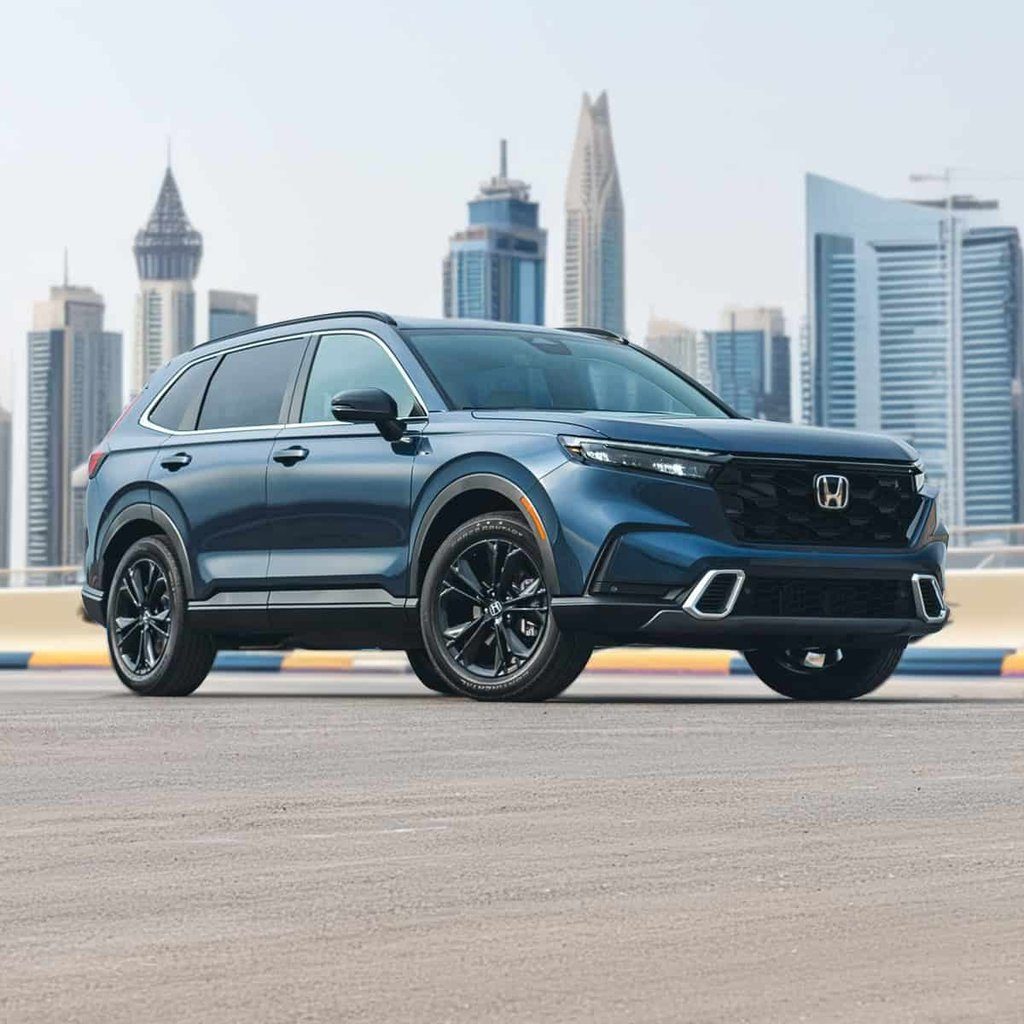
The Modern Benchmark of Compact Crossovers
The compact crossover segment is one of the most fiercely contested arenas in the automotive industry, serving as the primary transportation choice for millions of households. Within this crowded space, the sixth-generation Honda CR-V stands as a highly influential benchmark. Redesigned with a more mature, upright, and rugged aesthetic, the CR-V moves away from the soft, bulbous styling of its predecessors in favor of a clean, sophisticated profile that shares its underlying architecture with the eleventh-generation Civic. This structural foundation provides a rigid chassis, a wider track, and a longer wheelbase, all of which contribute to a more planted and composed ride.
While competitors like the Toyota RAV4 lean into a more aggressively angular, off-road-inspired look and the Subaru Forester prioritizes boxy visibility, the CR-V strikes a calculated middle ground. It is designed to be an unobtrusive, highly dependable partner for daily life, offering predictable driving dynamics and an intuitive layout that requires virtually no learning curve. Whether navigating tight urban parking garages or embarking on cross-country road trips, the CR-V's primary strength lies in its balanced execution, delivering exactly what buyers in this segment value most: space, efficiency, and stress-free operation.
Sources: automobiles.honda.com
Powertrain Architecture: Turbocharged vs. Hybrid Engineering
When purchasing a CR-V, buyers face a fundamental choice between two distinct engineering philosophies under the hood. The standard gasoline-only trims (LX, EX, and EX-L) are powered by a 1.5-liter turbocharged inline-four engine. This powerplant produces 190 horsepower at 6,000 rpm and 179 lb-ft of torque across a broad powerband from 1,700 to 5,000 rpm. It is paired with a continuously variable transmission (CVT) that has been programmed to simulate traditional gear shifts under heavy acceleration, reducing the "rubber-band" sensation common to older CVTs. This engine is highly capable for daily commuting, though it can sound somewhat coarse and buzzy when pushed hard to merge onto fast-moving highways.
For those seeking a more refined and responsive driving experience, Honda offers an advanced two-motor hybrid system on the Sport, Sport-L, and Sport Touring trims. This system pairs a 2.0-liter Atkinson-cycle four-cylinder engine with two electric motors to generate a combined 204 horsepower and an impressive 247 lb-ft of torque. Because the electric propulsion motor handles the majority of low-speed acceleration, the hybrid model delivers immediate, linear torque off the line, making it feel significantly punchier and quieter in stop-and-go city traffic. Additionally, the hybrid powertrain utilizes an electronic CVT (e-CVT) that coordinates the power sources seamlessly.
Towing capacities also differ between the two setups. The turbocharged gasoline models are rated to tow up to 1,500 pounds when properly equipped, which is sufficient for a small utility trailer or a pair of jet skis. Conversely, the hybrid models are limited to a maximum towing capacity of 1,000 pounds. If you frequently pull light loads, the gas-only model offers a slight mechanical advantage, whereas the hybrid is optimized almost entirely for fuel efficiency and daily driving refinement.
Sources: automobiles.honda.com
Real-World Fuel Economy and Efficiency Expectations
Fuel economy is a primary driver for compact SUV purchases, and the CR-V's two powertrains offer vastly different efficiency profiles. According to official EPA estimates, the front-wheel-drive (FWD) turbocharged gasoline model achieves 28 mpg in the city, 34 mpg on the highway, and 30 mpg combined. Opting for the Real Time All-Wheel Drive (AWD) system drops those figures slightly to 27 mpg city, 32 mpg highway, and 29 mpg combined. These are highly competitive numbers for a non-hybrid compact crossover, making the gas-only CR-V a very economical choice for drivers who cover a lot of highway miles.
The hybrid models, however, elevate efficiency to a different tier, particularly in urban environments. The FWD hybrid variant is EPA-rated at an exceptional 43 mpg city, 36 mpg highway, and 40 mpg combined. The AWD hybrid models carry ratings of 40 mpg city, 34 mpg highway, and 37 mpg combined. It is crucial for buyers to understand why the hybrid's city rating is so much higher than its highway rating: in stop-and-go city traffic, the vehicle frequently operates on pure electric power and recaptures kinetic energy through regenerative braking. On the highway, the gasoline engine must run continuously to maintain cruising speeds, and aerodynamic drag plays a much larger role, reducing the hybrid's efficiency advantage.
Real-world fuel economy will inevitably vary based on driving style, terrain, and climate. For instance, cold winter weather can temporarily reduce hybrid battery efficiency and force the gasoline engine to run more frequently to generate cabin heat. To set realistic expectations and compare detailed fuel economy data across different model years and drivetrains, shoppers should consult the official government resource at FuelEconomy.gov.
Sources: www.fueleconomy.gov, automobiles.honda.com
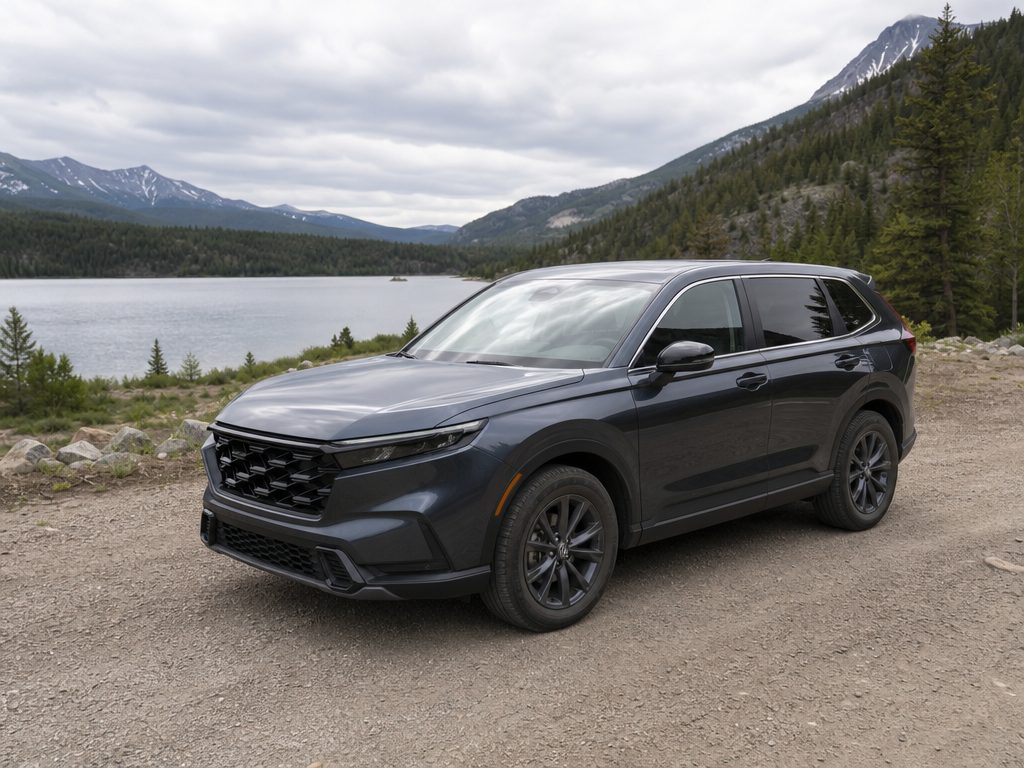
Interior Ergonomics and Dashboard Usability
Step inside the cabin, and the CR-V greets you with an interior design that is both visually appealing and highly functional. The centerpiece of the dashboard is a distinctive metal honeycomb mesh accent that stretches from the steering column to the passenger-side door. This design element is not merely aesthetic; it cleverly conceals the physical air vents, creating a clean, uncluttered horizontal line across the cabin. The overall material quality is excellent for this class, with soft-touch plastics, padded armrests, and robust switchgear placed exactly where your hands naturally fall.
Honda has resisted the industry trend of burying essential vehicle controls deep within touchscreen menus. The CR-V retains physical, knurled dials for the climate control system, allowing drivers to adjust the temperature, fan speed, and airflow by feel alone, without taking their eyes off the road. Similarly, the infotainment system features a physical volume knob and dedicated shortcut buttons for home and back functions. Outward visibility is another major design triumph; the A-pillars are remarkably thin, and the side mirrors are mounted on the door panels rather than the window glass, significantly reducing blind spots when turning or merging.
Sources: automobiles.honda.com
Passenger Space and Second-Row Practicality
The CR-V has long been celebrated for its interior packaging, and this generation maximizes passenger comfort to an impressive degree. Up front, the seats are designed with a body-stabilizing frame that reduces fatigue on long journeys, offering excellent lumbar support and clear sightlines. Front-seat occupants enjoy 41.3 inches of legroom and up to 40.0 inches of headroom, accommodating taller drivers with ease.
However, it is the second row where the CR-V truly distances itself from many competitors. Rear-seat passengers are treated to a class-leading 41.0 inches of legroom, which is comparable to many midsize and full-size SUVs. This abundance of space makes the CR-V an exceptional vehicle for growing families. Installing bulky, rear-facing child safety seats is incredibly straightforward and does not require the front passenger or driver to slide their seats forward uncomfortably. To make loading children and cargo even easier, Honda engineered the rear doors to open to an exceptionally wide angle of nearly 90 degrees, a practical detail that owners will appreciate on a daily basis.
Sources: automobiles.honda.com
Cargo Capacity and Configuration Differences
While the passenger cabin remains uniform across the lineup, cargo capacity and trunk configurations differ significantly depending on whether you choose the turbocharged gasoline engine or the hybrid powertrain. It is vital for buyers to understand these exact physical differences before making a purchase decision, as they directly impact daily utility.
In the gas-only models (LX, EX, and EX-L), the cargo area provides a highly generous 39.3 cubic feet of space behind the second row. These models feature an adjustable, dual-level cargo floor. When set to its lowest position, it maximizes vertical space; when raised, it creates a completely flat load floor when the 60/40 split rear seats are folded down, expanding the total carrying capacity to a cavernous 76.5 cubic feet. Underneath this floor, a compact spare tire is standard equipment.
In contrast, the hybrid models (Sport, Sport-L, and Sport Touring) must accommodate the hybrid battery pack (the Intelligent Power Unit, or IPU). This battery placement eliminates the dual-level cargo floor and the spare tire, which is replaced by a tire repair kit. Consequently, the cargo floor is permanently fixed at the higher level. This reduces the cargo volume behind the second row to 36.3 cubic feet in the Sport and Sport-L trims. In the top-tier Sport Touring trim, this volume is further reduced to 34.7 cubic feet because of the physical housing required for the premium Bose subwoofer on the right side of the trunk. When you fold the rear seats flat in the hybrid models, the maximum cargo capacity is rated at 71.8 cubic feet. While still highly competitive, buyers who prioritize maximum cargo volume or require a physical spare tire may find the gas-only models better suited to their needs.
Sources: automobiles.honda.com
Infotainment, Connectivity, and Sound Systems
Honda's approach to in-car technology is highly functional, prioritizing ease of use over flashy, overly complex displays. The entry-level LX, EX, and Sport Hybrid trims are equipped with a 7-inch color touchscreen. While this screen is somewhat small by modern standards, it features physical buttons for primary menus and is highly responsive. Smartphone integration via Apple CarPlay and Android Auto is standard, though it requires a physical USB cable connection on these lower trims.
Moving up to the EX-L, Sport-L, or Sport Touring trims upgrades the dashboard to a larger 9-inch touchscreen. This larger display features faster processing speeds, sharper graphics, and supports wireless Apple CarPlay and Android Auto. These upper trims also include a convenient wireless smartphone charging pad at the base of the center console. To keep all passengers connected, Honda provides a mix of USB-A and fast-charging USB-C ports throughout the cabin. For audiophiles, the Sport Touring Hybrid is the standout choice, as it comes equipped with a custom-engineered 12-speaker Bose premium audio system that delivers rich, balanced sound throughout the cabin.
Sources: automobiles.honda.com
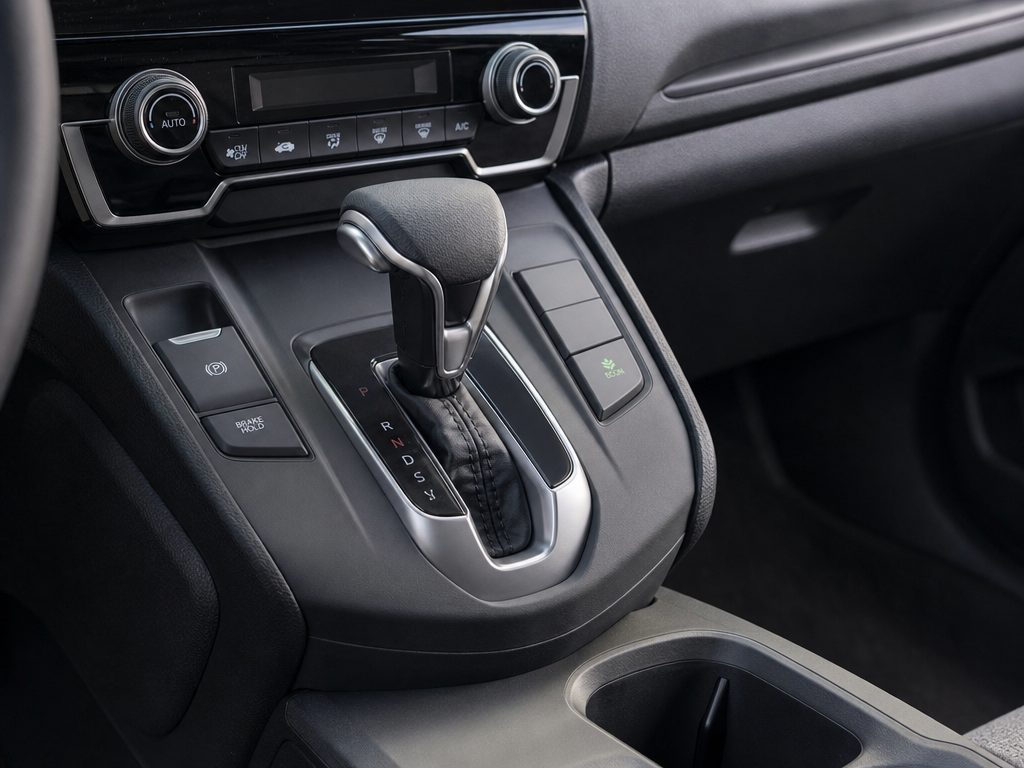
Honda Sensing: Active Safety and Driver Assistance
Safety is a core pillar of the Honda brand, and every CR-V comes standard with the comprehensive Honda Sensing suite of driver-assist technologies. This active safety package includes Collision Mitigation Braking System (CMBS), Road Departure Mitigation (RDM), Lane Keeping Assist System (LKAS), and Adaptive Cruise Control (ACC) with Low-Speed Follow. It also features Traffic Jam Assist, which helps steer and maintain distance in slow-moving highway traffic.
In real-world driving, these systems operate with a high degree of refinement. The adaptive cruise control accelerates and brakes smoothly, avoiding the jerky inputs that plague some competitor systems. However, drivers should remain aware of their limitations. The camera- and radar-based sensors can occasionally become confused by faded lane markings, complex construction zones, or direct, blinding sunlight. Furthermore, heavy snow, torrential rain, or road grime can temporarily block the radar sensor behind the front Honda emblem or the camera mounted at the top of the windshield. If this occurs, the system will temporarily deactivate and display a warning light on the dashboard. This is a normal safety protocol; pulling over safely and wiping away the obstruction will immediately restore full functionality.
Sources: automobiles.honda.com
Crash Test Ratings and Structural Safety
Beyond active driver assistance, the CR-V is engineered to protect occupants in the event of a collision. The vehicle utilizes Honda's Advanced Compatibility Engineering (ACE) body structure, which is designed to absorb and deflect crash energy away from the passenger compartment.
In crash evaluations conducted by the Insurance Institute for Highway Safety (IIHS), the Honda CR-V earned the "Top Safety Pick" designation. It achieved the highest rating of "Good" in the small overlap front and side crash tests. However, in the IIHS's updated, more stringent moderate overlap front crash test—which now evaluates rear-seat passenger protection—the CR-V received a "Poor" rating, reflecting a common challenge among compact SUVs in managing rear-passenger seatbelt forces. In the updated vehicle-to-vehicle front crash prevention evaluation, the CR-V's automatic emergency braking system earned an "Acceptable" rating.
From the National Highway Traffic Safety Administration (NHTSA), the CR-V earned a 5-Star Overall Safety Rating, performing exceptionally well in both frontal and side barrier crash tests. Because safety standards and testing protocols are updated periodically, buyers are strongly encouraged to verify the most current crash test ratings for their specific model year directly at the official IIHS website (iihs.org) and the NHTSA database (nhtsa.gov).
Sources: www.iihs.org, www.nhtsa.gov
Trim Selection, Smart Purchasing, and Ownership Costs
Choosing the right CR-V requires a clear understanding of your driving habits and budget. On the gas-only side, the LX serves as a budget-conscious entry point, while the EX and EX-L add desirable comforts like heated seats, a sunroof, and leather upholstery. On the hybrid side, the Sport Hybrid offers an accessible path to high efficiency, the Sport-L adds leather and a power tailgate, and the Sport Touring represents the fully loaded flagship.
To determine if the hybrid is worth the price premium over a comparable gas-only model, buyers should calculate their "hybrid payback period." For example, if a hybrid trim costs $2,000 more than its gas equivalent, and you drive 15,000 miles per year with local fuel priced at $3.50 per gallon, the hybrid's superior fuel economy will save you roughly $400 to $500 annually in fuel costs. In this scenario, it will take approximately four to five years of ownership to recoup the initial price premium. If your daily commute consists primarily of stop-and-go city driving, the payback period will be even shorter.
When visiting a dealership, always request a fully itemized out-the-door (OTD) price sheet that breaks down the base vehicle cost, sales tax, registration fees, and any dealer-installed accessories or documentation fees. Avoid paying for high-markup dealer add-ons like paint protection, nitrogen-filled tires, or third-party security systems. To research current manufacturer incentives, regional lease specials, and certified pre-owned programs, visit the official manufacturer portal at automobiles.honda.com.
Sources: automobiles.honda.com