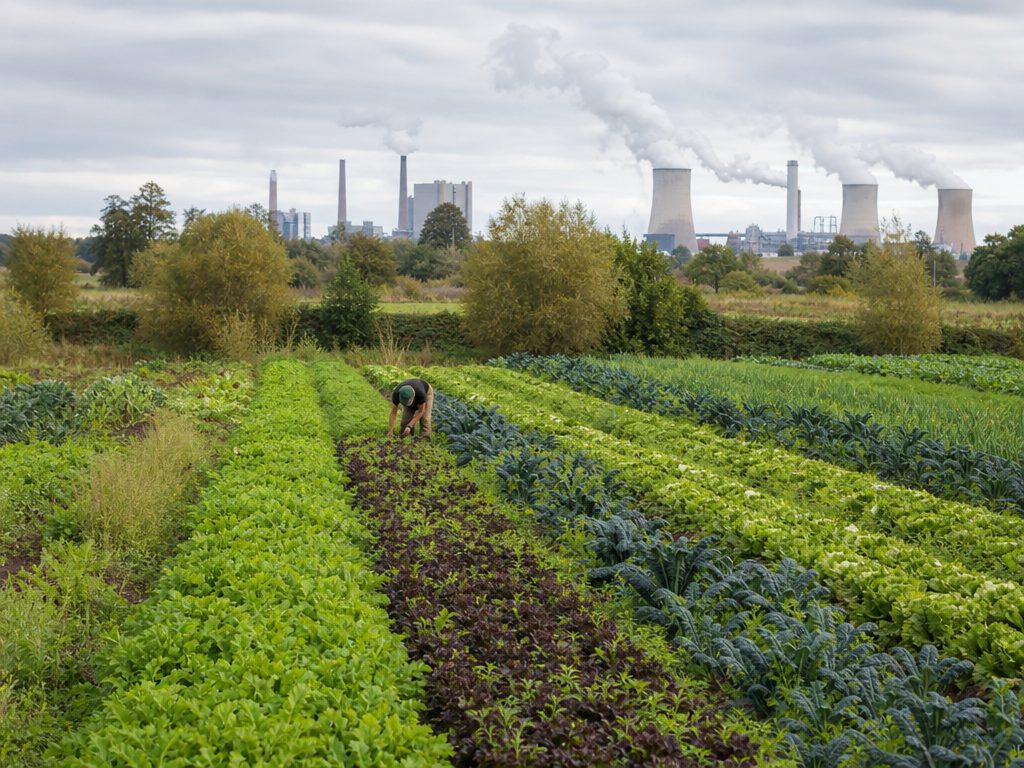
The Lifecycle of Food Emissions: Beyond the Farm Gate
To truly understand the carbon footprint of your daily diet, you must look beyond the simple concept of "food miles" and examine the entire life cycle of what you consume. A comprehensive Life Cycle Assessment (LCA) evaluates greenhouse gas emissions at every stage of a food product's journey: from land-use change (such as deforestation for pastures) and on-farm activities (including tractor fuel, synthetic fertilizers, and livestock digestion) to processing, packaging, transport, retail, and home preparation. According to a landmark meta-analysis by Joseph Poore and Thomas Nemecek published in the journal Science, the vast majority of food-related emissions occur before the product ever leaves the farm gate. In fact, land-use change and on-farm agricultural practices account for more than 80% of the total greenhouse gas footprint of most foods.
This means that "what" you choose to eat has a far greater impact on the planet than "where" that food was grown. While buying local supports regional economies and reduces transport emissions on the margin, it is a common misconception that transportation is the primary driver of food's environmental cost. For most food products, transport accounts for less than 10% of their total life-cycle emissions. By shifting your focus toward low-impact food categories rather than solely focusing on local sourcing, you can make a much more substantial dent in your personal carbon footprint. For instance, substituting a high-emission food like beef with a low-emission alternative like tofu once a week reduces emissions far more than sourcing an entire week's worth of beef from a local farm.
Sources: ourworldindata.org, pubmed.ncbi.nlm.nih.gov
The High-Impact Culprits: Red Meat, Dairy, and Enteric Fermentation
The single most effective dietary shift you can make to reduce greenhouse gas emissions is cutting back on red meat and dairy. Ruminant animals—such as cattle, sheep, and goats—possess a unique digestive system that relies on enteric fermentation to break down fibrous plants. A natural byproduct of this process is methane (CH4), a greenhouse gas that is approximately 28 times more potent than carbon dioxide (CO2) over a 100-year timescale (GWP100), and up to 80 times more potent over a 20-year horizon (GWP20). This means that short-term climate mitigation is heavily dependent on reducing methane emissions today.
The data compiled by researchers at Our World in Data reveals a stark contrast between animal-based and plant-based foods: producing one kilogram of beef from a dedicated beef herd emits an average of 60 kilograms of greenhouse gases (measured in carbon dioxide equivalents, or CO2e). In comparison, producing one kilogram of peas or lentils emits just 1 kilogram of CO2e—a sixty-fold difference. Dairy products also carry a heavy environmental toll. Producing a single liter of cow's milk generates roughly 3.2 kilograms of CO2e and requires about 8.9 square meters of land. While completely eliminating animal products is a highly effective goal, even moderate reductions yield significant benefits. Swapping beef for poultry, pork, or plant-based proteins like tofu and tempeh dramatically lowers your daily emissions profile without requiring a radical lifestyle overhaul.
Sources: ourworldindata.org
Navigating Seafood: Bottom Trawling, Aquaculture, and Bivalves
While seafood is frequently promoted as a climate-friendly alternative to terrestrial red meat, the carbon footprint of the fishing industry is complex and highly variable. One of the most significant, yet historically overlooked, environmental costs of wild-caught seafood is the practice of bottom trawling. Bottom trawling involves dragging massive, weighted nets across the ocean floor to catch demersal species like shrimp, cod, and flounder. This process physically destroys fragile benthic ecosystems and stirs up carbon-rich marine sediments.
According to a landmark 2024 study published in Frontiers in Marine Science by Trisha Atwood and a global team of researchers, bottom trawling is estimated to release between 340 and 370 million metric tons (0.34 to 0.37 gigatons) of carbon dioxide (CO2) into the atmosphere annually. The study utilized advanced ocean-carbon models to establish that approximately 55% to 60% of the aqueous CO2 produced when trawlers disturb marine sediments makes its way into the atmosphere within 7 to 9 years. The remaining 40% to 45% of the disturbed carbon remains dissolved in the water, contributing to localized ocean acidification and reducing the ocean's capacity to absorb atmospheric carbon.
Farmed fish (aquaculture) presents a different set of challenges; its carbon footprint is largely determined by the feed used. Many aquaculture operations rely on feed containing wild-caught forage fish or soy grown on deforested land in South America. To minimize your seafood carbon footprint, prioritize low-impact wild species caught via hook-and-line or mid-water trawls, or opt for farmed bivalves like mussels, clams, and oysters. Bivalves require no feed, filter and clean the surrounding water, and actually sequester carbon in their calcium carbonate shells (CaCO3).
Sources: www.frontiersin.org, www.msc.org
The Plant-Forward Transition: Strategic Swaps and Nutritional Balance
Transitioning to a plant-forward diet does not require an all-or-nothing commitment to veganism. Instead, adopting a flexible, incremental approach allows your cooking habits, grocery routines, and digestive system to adapt naturally. Start by designating specific days of the week as entirely plant-based, or focus on making breakfast and lunch meat-free. When restructuring your plate, replace the protein portion with nutrient-dense legumes such as lentils, chickpeas, black beans, and split peas.
These crops have a unique ecological advantage: they are nitrogen-fixing plants. Through a symbiotic relationship with Rhizobium bacteria in their root nodules, legumes draw nitrogen gas from the atmosphere and convert it into ammonia, a natural fertilizer. This process dramatically reduces the need for synthetic, fossil-fuel-derived nitrogen fertilizers, which are major drivers of nitrous oxide (N2O) emissions—a greenhouse gas nearly 300 times more potent than carbon dioxide.
To ensure nutritional adequacy during this transition, focus on dietary diversity. Combine grains and legumes throughout the day to obtain a complete amino acid profile. Plant-based iron (non-heme iron) is less readily absorbed by the body than animal-based heme iron; however, you can easily enhance its absorption by pairing iron-rich foods like spinach, lentils, and pumpkin seeds with foods high in vitamin C (ascorbic acid), such as bell peppers, tomatoes, or citrus juice. If you choose to transition to a fully plant-based diet, consider supplementing with vitamin B12, a crucial nutrient that is not naturally present in plant foods.
Sources: ourworldindata.org
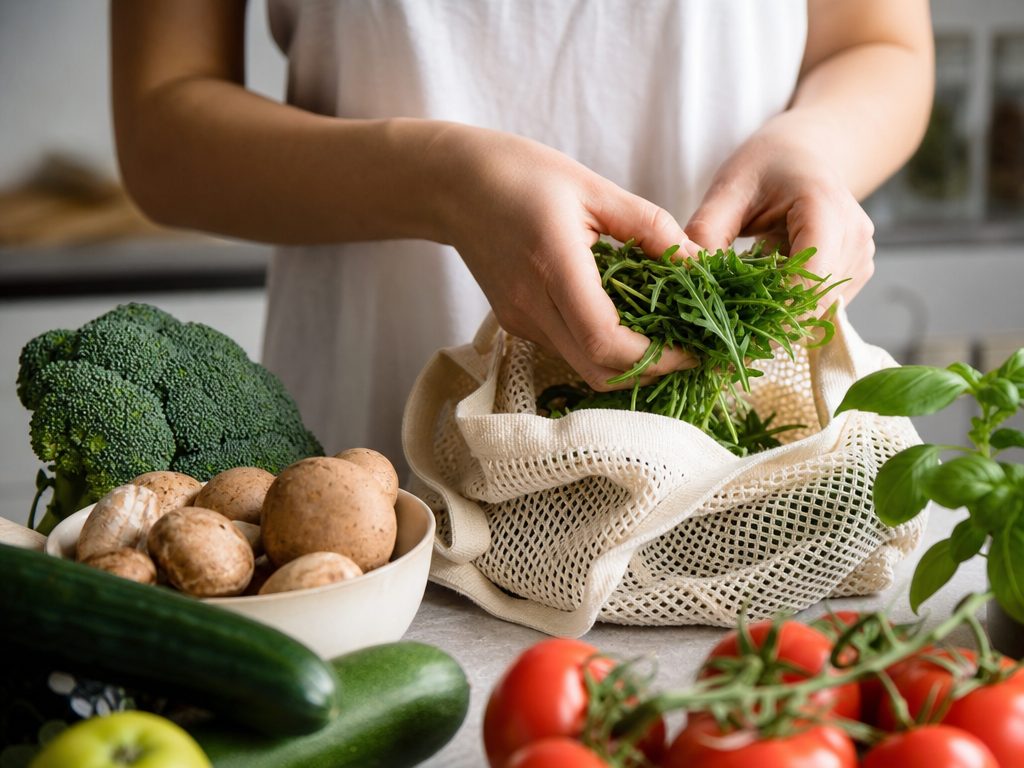
The Water-Carbon Nexus of Plant Milks
The rise of plant-based milk alternatives has provided consumers with numerous options to replace traditional dairy, but these alternatives are not created equal when evaluating the intersection of carbon emissions and water usage. According to data from Our World in Data, all major plant-based milks—including soy, oat, almond, and rice—have a significantly lower carbon footprint and land-use requirement than cow's milk. Specifically, producing one liter of dairy milk emits about 3.2 kilograms of CO2e, whereas oat milk emits 0.9 kilograms, soy milk emits 1.0 kilogram, and almond milk emits just 0.7 kilograms.
However, the trade-offs become apparent when analyzing freshwater consumption. Almond milk requires an immense amount of water to produce—approximately 371.5 liters of water per single liter of milk. Because the vast majority of the world's almonds are grown in California's Central Valley, a region plagued by chronic droughts and groundwater depletion, this high water footprint poses severe localized ecological strains. Rice milk also has a high water footprint and produces higher methane emissions than other plant milks due to the anaerobic conditions of flooded rice paddies, where methanogenic bacteria thrive in the oxygen-depleted soil.
Soy and oat milk emerge as the most balanced environmental choices. Soy milk offers a high-protein nutritional profile similar to dairy with minimal water and land requirements, while oat milk provides a creamy texture and low overall resource demands, making it highly suitable for temperate climates where oats can be grown with minimal irrigation.
Sources: ourworldindata.org
Sourcing Strategies: Deciphering Food Miles and Air Freight
Although the distance food travels is often a minor factor in its overall carbon footprint, there is one critical exception that climate-conscious shoppers must learn to navigate: air freight. While the vast majority of global food imports travel via cargo ships—which are highly efficient and emit relatively low levels of greenhouse gases per ton of cargo—highly perishable, high-value foods are often flown in on cargo planes. Transporting food by air emits approximately 50 times more greenhouse gases than shipping the same amount by sea.
Unfortunately, grocery stores rarely label whether an item was air-freighted, leaving consumers to deduce the transport method based on seasonality and perishability. As a general rule of thumb, if a food item is highly perishable, out of season in your region, and imported from another continent, it was likely transported by air. Common culprits include fresh asparagus, green beans, berries, cherries, and certain fresh seafood items purchased during the winter months.
To avoid these high-emission traps, align your diet with local harvest cycles or opt for frozen and canned alternatives. Frozen fruits and vegetables are processed immediately after harvest and can be transported via lower-emission sea or rail freight, allowing you to enjoy out-of-season produce with a fraction of the carbon footprint.
Sources: ourworldindata.org
Deciphering Eco-Labels: Organic, Biodynamic, and Regenerative
Navigating the grocery store aisles requires understanding the environmental implications of various agricultural eco-labels and certifications. The USDA Organic label guarantees that food was grown without synthetic chemical fertilizers or pesticides. Because the manufacturing of synthetic nitrogen fertilizers is an incredibly energy-intensive process relying heavily on natural gas, organic farming inherently reduces fossil fuel consumption at the production stage. However, organic yields can sometimes be lower than conventional yields, requiring more land to produce the same amount of food, which can lead to indirect land-use change elsewhere.
To address this and push sustainability further, the Regenerative Organic Certified (ROC) standard was established. Administered by the Regenerative Organic Alliance, ROC builds upon USDA Organic baseline requirements by focusing on three distinct pillars: soil health, animal welfare, and social fairness for farmers and workers. Regenerative practices—such as cover cropping, crop rotation, and minimal tillage—aim to actively sequester carbon from the atmosphere and store it deep within the soil, turning agricultural land into a carbon sink.
Another rigorous standard is Demeter Biodynamic certification, which treats the entire farm as a self-contained, closed-loop living organism, strictly limiting imported fertilizers. Because certification standards and scientific understandings of carbon sequestration are continuously evolving, consumers should verify current program requirements directly on the official Regenerative Organic Alliance website.
Sources: regenorganic.org
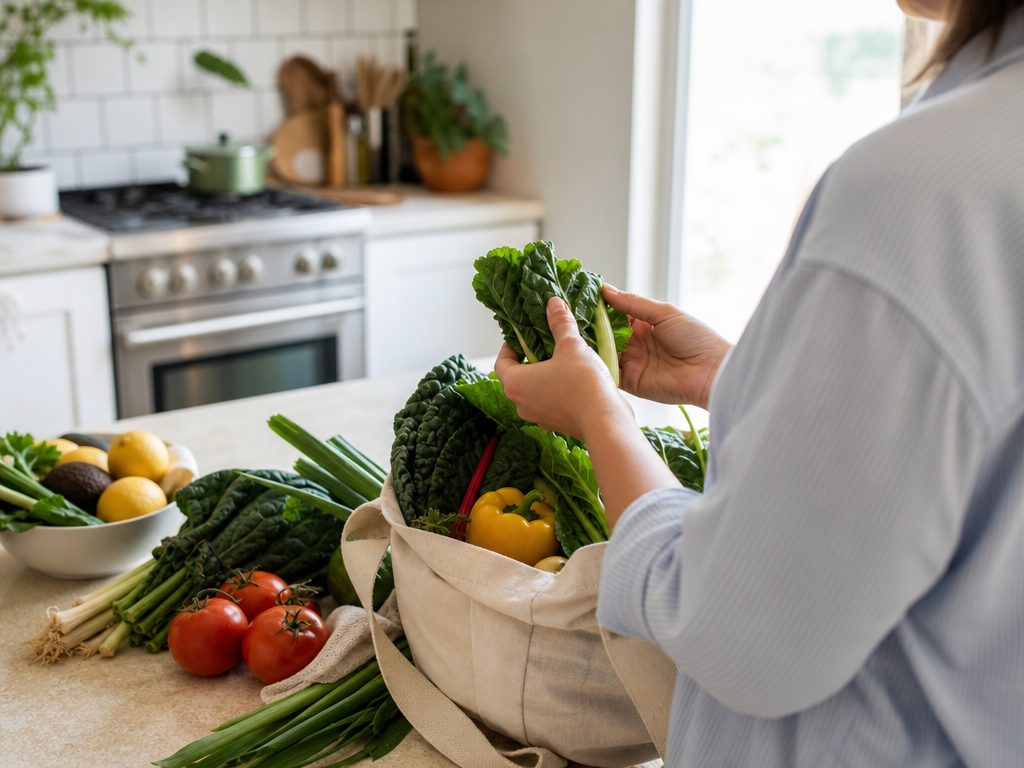
Minimizing Food Waste: The EPA's Wasted Food Scale
Reducing household food waste is one of the most immediate and financially rewarding ways to lower your personal carbon footprint. When food is discarded and sent to a municipal landfill, it becomes buried under layers of trash, creating an anaerobic (oxygen-depleted) environment. Under these conditions, specialized methanogenic bacteria break down the organic matter and release methane—a greenhouse gas with a warming potential 28 times greater than carbon dioxide over a century. According to the U.S. Environmental Protection Agency (EPA), wasted food is the single most common material landfilled in the United States, accounting for an astonishing 24% of municipal solid waste and driving 58% of landfill methane emissions.
To guide consumers and businesses in mitigating this crisis, the EPA released an updated Wasted Food Scale in late 2023, replacing the outdated 1990s Food Recovery Hierarchy. This science-based scale ranks food management pathways from most to least environmentally preferable. The absolute highest tier is Prevention—reducing the amount of surplus food generated in the first place. This is followed by Donation and Upcycling (repurposing food for human consumption), Feeding Animals, Anaerobic Digestion, Composting, and finally, Landfilling or sending food down the drain. By prioritizing prevention over disposal, you address both the upstream emissions of food production and downstream landfill emissions.
Sources: www.epa.gov
Preservation Tactics: Extending the Life of Your Groceries
Implementing practical food preservation techniques at home is a highly effective way to align your kitchen with the top tier of the EPA's Wasted Food Scale. Before your fresh produce has a chance to spoil, utilize simple, reversible preservation methods to extend its shelf life. Freezing is an incredibly versatile option; however, to preserve the texture, color, and nutritional value of vegetables like broccoli, green beans, and carrots, always blanch them in boiling water for one to two minutes followed by an immediate ice bath before freezing. This process deactivates the natural enzymes (such as polyphenol oxidase) that cause decay, discoloration, and loss of flavor.
For surplus onions, cucumbers, radishes, or carrots, quick-pickling in a simple solution of equal parts vinegar and water with a pinch of salt and sugar can extend their usability by several weeks in the refrigerator. Proper refrigerator organization also plays a critical role in waste prevention. Many fruits—such as apples, bananas, and avocados—release ethylene gas as they ripen, which accelerates the decay of ethylene-sensitive items like leafy greens, broccoli, and cucumbers. Store these categories in separate drawers, utilizing the high-humidity drawer for leafy greens to prevent moisture loss and the low-humidity drawer for ethylene-producing fruits to allow gases to escape. If leafy greens do begin to wilt, submerge them in ice water for 15 minutes to restore cell turgor pressure and make them crisp again.
Sources: www.usda.gov
Eco-Friendly Kitchen Operations: Energy-Efficient Cooking
The carbon footprint of your diet does not stop at the grocery checkout; the way you prepare your meals at home significantly influences your overall energy consumption. Traditional kitchen ovens require a substantial amount of energy to preheat and operate, often wasting heat by warming a large, empty chamber. To optimize your kitchen's energy efficiency, transition to smaller, targeted cooking appliances whenever possible. Microwaves, toaster ovens, air fryers, and electric pressure cookers (such as Instant Pots) cook food significantly faster and use up to 70% less electricity than a conventional oven.
If you are using a stovetop, ensure you match the size of your cookware to the burner; using a small pot on a large burner wastes heat, while a large pot on a small burner increases cooking times. Always cook with a lid on your pots and pans to trap steam and heat, which can cut boiling times in half and reduce energy use. Additionally, practice the technique of passive cooking: turn off your stovetop or oven a few minutes before your food is fully cooked, allowing the residual heat trapped within the cookware to finish the process. Batch-cooking large portions of grains, beans, or stews once a week also minimizes the energy required for daily meal preparation, as reheating a single portion in a microwave uses a fraction of the energy of cooking from scratch.
Sources: www.energy.gov
Closing the Loop: Composting Solutions for Every Living Space
For the organic waste that cannot be avoided—such as banana peels, eggshells, onion skins, and coffee grounds—composting is the essential final step to close the loop on your dietary carbon footprint. Composting introduces oxygen into the decomposition process, facilitating aerobic decomposition. Unlike anaerobic landfill conditions, aerobic composting produces carbon dioxide (which is part of the natural biogenic carbon cycle) and a nutrient-rich soil amendment, completely avoiding the generation of potent methane gas.
To run a successful home composting system, it is critical to understand the distinction between chemical ratios and physical volumes. At a microscopic level, composting microorganisms require a chemical Carbon-to-Nitrogen (C:N) ratio of approximately 25:1 to 30:1 by weight to break down organic matter efficiently without producing foul odors. In practical terms for home gardeners, this chemical balance translates to a physical volume ratio of approximately 2 to 3 parts "brown" carbon-rich materials (such as dry leaves, straw, or shredded cardboard) to 1 part "green" nitrogen-rich materials (such as fresh food scraps or coffee grounds).
Depending on your living situation, several composting systems are available. If you have a backyard, a traditional compost bin or tumbler allows you to easily maintain this physical volume balance. For apartment dwellers, indoor vermicomposting utilizes a specialized bin with red wiggler worms (Eisenia fetida) to quietly and odorlessly process food scraps into highly fertile worm castings. Alternatively, Bokashi systems use anaerobic fermentation to pickle food waste—including meat and dairy scraps that are typically excluded from traditional compost piles—before burying it in soil. Many cities also offer municipal organic waste collection programs. Because municipal rules regarding accepted materials (such as compostable plastics or meat) vary widely by jurisdiction, always verify local guidelines with your city's waste management department to ensure proper sorting.
Sources: www.epa.gov
- https://ourworldindata.org/environmental-impacts-of-food
- https://pubmed.ncbi.nlm.nih.gov/29853680/
- https://www.frontiersin.org/journals/marine-science/articles/10.3389/fmars.2023.1125137/full
- https://www.msc.org/
- https://ourworldindata.org/environmental-footprints-of-dairy-and-plant-based-milks
- https://ourworldindata.org/very-little-of-global-food-is-transported-by-air
- https://regenorganic.org/
- https://www.epa.gov/sustainable-management-food/wasted-food-scale
- https://www.usda.gov/media/blog/2022/01/24/food-loss-and-waste
- https://www.energy.gov/energysaver/appliances-and-electronics
- https://www.epa.gov/recycle/composting-home