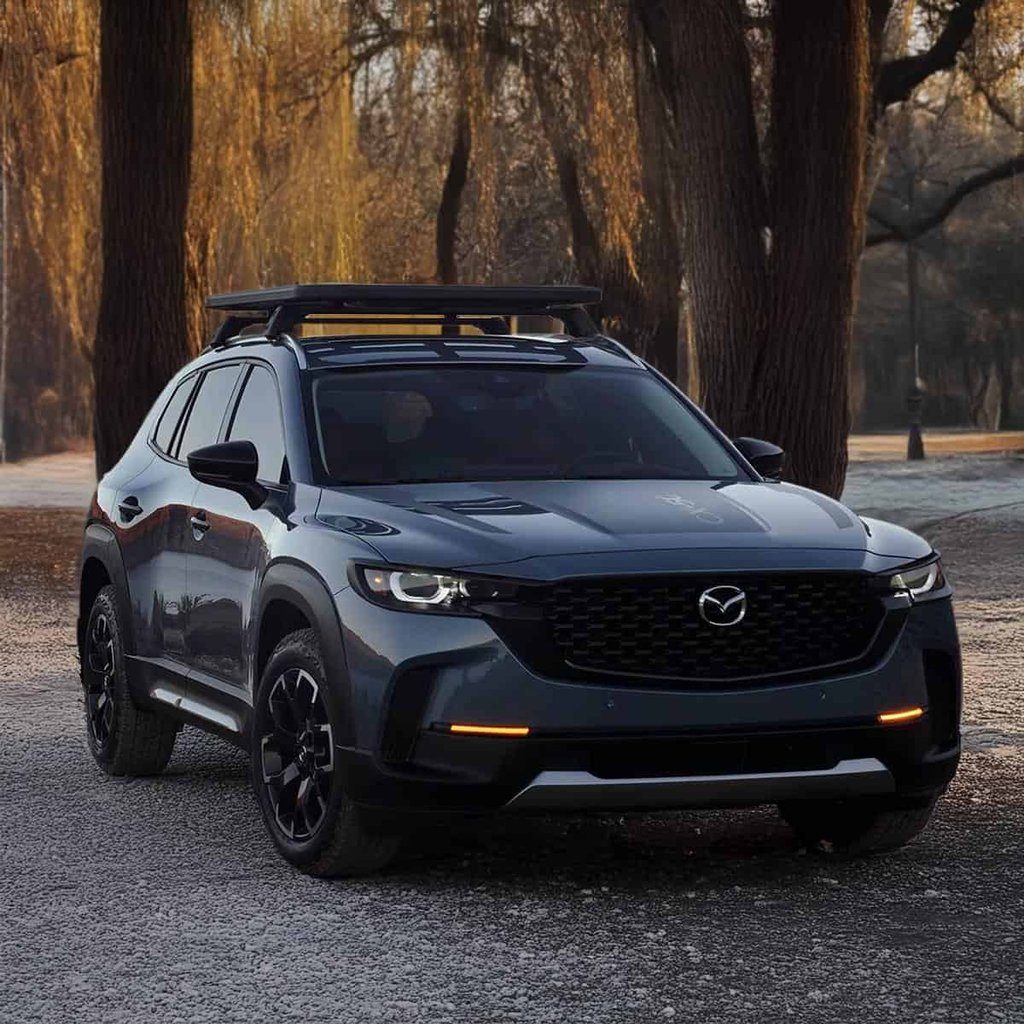
A Strategic Pivot: The Philosophy of "Wilderness-Adjacent"
Mazda has historically carved out a unique niche in the automotive landscape, celebrated for its sharp on-road dynamics, near-luxury interiors, and the "Zoom-Zoom" driving philosophy. However, the introduction of the CX-50 marked a distinct pivot toward the great outdoors. Rather than abandoning its core identity of pavement-carving agility, Mazda sought to bridge the gap between urban refinement and rugged trail capability. This strategy targets "wilderness-adjacent" buyers—drivers who spend their weekdays navigating tight city streets and highway commutes but dedicate their weekends to trailheads, campsites, and outdoor excursions.
The CX-50 is not designed to compete with hardcore, body-on-frame rock crawlers. Instead, it positions itself as a highly athletic, premium alternative to traditional outdoor-focused crossovers. By blending a low-slung, aggressive stance with sophisticated all-wheel-drive technology, Mazda has engineered a vehicle that feels exceptionally composed on winding asphalt while remaining highly capable on rutted dirt roads, gravel paths, and snow-covered mountain passes. This multi-year review covers the evolution of the CX-50 platform from its debut through the latest model years, highlighting how it balances these seemingly contradictory design goals.
Sources: en.wikipedia.org
Platform and Stance: How the CX-50 Differs from the CX-5
To understand the CX-50, one must first understand its structural foundation. While it is easy to assume the CX-50 is simply a ruggedized version of the popular CX-5, the two vehicles are built on entirely different platforms. The CX-5 utilizes an older, dedicated platform, whereas the CX-50 is built on Mazda's newer Small Product Group architecture, which it shares with the Mazda3 and the CX-30. This platform shift fundamentally alters the vehicle's proportions, driving dynamics, and utility.
Compared to the CX-5, the CX-50 is nearly six inches longer and roughly two inches wider, yet it sits lower to the ground in terms of overall height. This "long, wide, and low" silhouette is a deliberate engineering choice. The wider track provides a broader footprint, which significantly enhances stability when cornering on pavement and navigating uneven surfaces off-road. Furthermore, the lower roofline serves a highly practical purpose for outdoor enthusiasts: it makes loading heavy gear—such as kayaks, mountain bikes, or rooftop tents—onto roof racks substantially easier than on taller, more traditional SUVs. However, this lower roofline does result in a slightly more car-like seating position, which may surprise drivers accustomed to the high, commanding view of a conventional crossover.
Sources: en.wikipedia.org
Exterior Design and Trail Armor: Form Meets Function
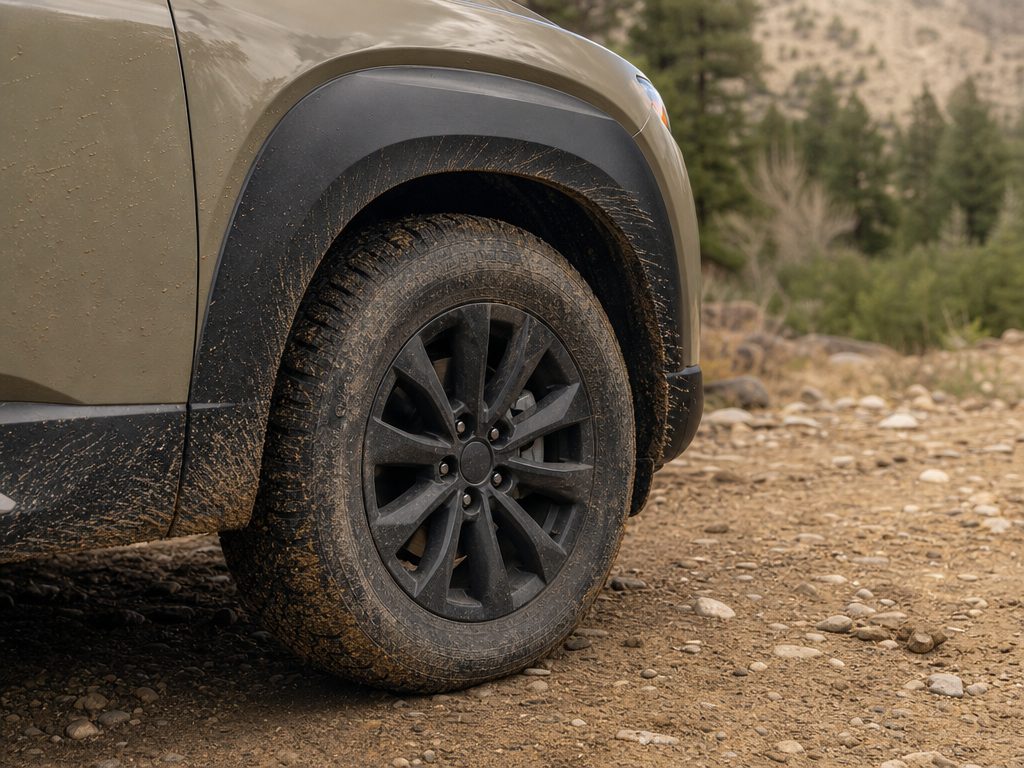
The visual identity of the CX-50 immediately signals its outdoor ambitions. It features prominent, squared-off black plastic body cladding around the wheel arches, a muscular shoulder line, and a wide, aggressive grille. These design cues are not merely cosmetic embellishments; they serve practical functions on the trail. The thick plastic cladding protects the painted sheet metal from flying gravel, brush scratches, and mud, reducing the long-term cosmetic wear associated with off-pavement driving.
However, buyers must understand the physical limitations of this design. While the CX-50 looks exceptionally rugged, its approach and departure angles are optimized for light off-roading rather than extreme overland expeditions. The front bumper overhang, while stylish, limits the vehicle's ability to climb over steep, vertical obstacles without scraping. The underbody is protected by plastic splash shields rather than heavy-duty steel skid plates, meaning that high-centering the vehicle on large rocks can cause costly damage to critical components. For drivers planning to venture deep into unmaintained territory, aftermarket underbody armor is highly recommended.
Sources: en.wikipedia.org
The Ground Clearance Matrix: Trim-by-Trim Specifications
One of the most critical specifications for any adventure-oriented vehicle is ground clearance. However, ground clearance on the CX-50 is not a single, uniform figure; it varies significantly depending on the model year, powertrain, and trim level. To help prospective buyers navigate these differences, we have compiled the exact ground clearance specifications across the lineup:
• 2.5 S Base Trims (Select, Preferred, Premium): These naturally aspirated gas models ride on standard suspension setups and offer 8.3 inches of ground clearance. This is highly respectable for a compact crossover, easily surpassing the CX-5 and providing ample clearance for deep snow and moderate dirt roads.
• Standard Turbo & Turbo Meridian Trims (2.5 Turbo, 2.5 Turbo Meridian Edition): Stepping up to the standard turbocharged models adjusts the suspension tuning slightly, resulting in 8.5 inches of ground clearance. This is also the exact clearance found on the 2.5 Turbo Meridian Edition, which balances its rugged wheel-and-tire package with a slightly stiffer spring rate.
• Maximum Clearance Trims (2.5 S Meridian Edition & Turbo Premium Plus): The maximum ground clearance of 8.6 inches is reserved exclusively for the naturally aspirated 2.5 S Meridian Edition and the flagship Turbo Premium Plus trim. These models feature optimized suspension geometry and wheel configurations that eke out every millimeter of trail clearance.
• The Hybrid Powertrain (Preferred, Premium, Premium Plus): Introduced for the 2025 model year, the hybrid variants sacrifice some ground clearance to accommodate their unique battery packaging and aerodynamic underbody panels. The Hybrid Preferred and Premium trims offer 7.8 inches of clearance, while the top-tier Hybrid Premium Plus increases this slightly to 8.1 inches.
Because specifications, wheel options, and trim structures can change with each model year, buyers should verify current dimensions on official manufacturer sites or at local dealerships before making a purchase decision.
Sources: www.edmunds.com, www.mazdausa.com
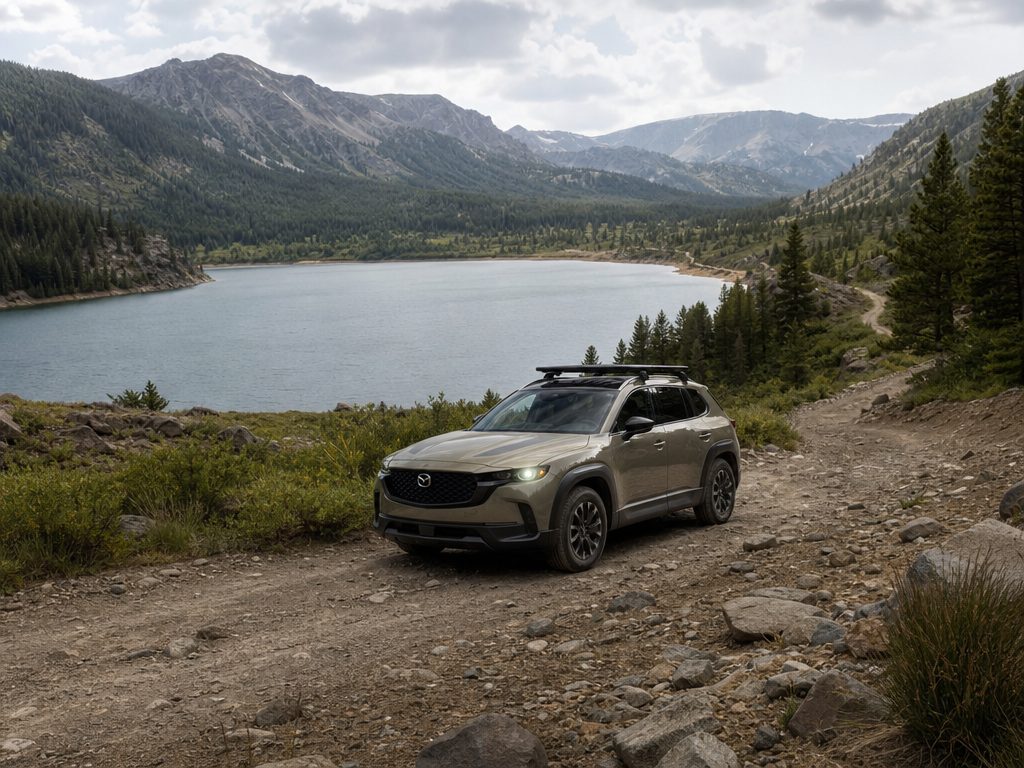
Powertrain Analysis: Naturally Aspirated vs. Twin-Scroll Turbo
Under the hood, the gas-powered CX-50 offers two distinct versions of Mazda's 2.5-liter Skyactiv-G four-cylinder engine, both paired with a traditional six-speed automatic transmission. Mazda's decision to stick with a geared automatic rather than a continuously variable transmission (CVT) is a major selling point for driving enthusiasts, as it provides crisp, predictable shifts and a much more engaging driving experience.
The base naturally aspirated 2.5-liter engine delivers 187 horsepower and 185 lb-ft of torque. While this engine is perfectly adequate for daily commuting and flat highway cruising, it can feel somewhat strained when the vehicle is fully loaded with camping gear, passengers, and climbing steep mountain passes.
For those who prioritize performance, the twin-scroll turbocharged 2.5-liter engine is a highly compelling upgrade. This engine is highly sensitive to fuel octane: on standard 87-octane regular unleaded, it produces 227 horsepower and 310 lb-ft of torque. Filling the tank with 93-octane premium fuel unlocks the engine's full potential, boosting output to 256 horsepower and 320 lb-ft of torque. The turbo's massive low-end torque—peaking at just 2,000 RPM—makes highway passing effortless and provides the necessary muscle for high-altitude mountain driving and towing.
Sources: en.wikipedia.org, www.mazdausa.com
The Game Changer: The CX-50 Hybrid (2025–2026 Models)
Recognizing the growing demand for fuel-efficient adventure vehicles, Mazda expanded the lineup by introducing the CX-50 Hybrid for the 2025 model year. Rather than developing a hybrid system from scratch, Mazda leveraged its partnership with Toyota, utilizing a highly proven 2.5-liter four-cylinder hybrid engine paired with three electric motors and an electronically controlled continuously variable transmission (eCVT).
This powertrain delivers a combined 219 horsepower and 163 lb-ft of torque from the gas engine alone (supplemented by instant electric torque from the motors). The primary appeal of the Hybrid is its exceptional efficiency: it achieves an EPA-estimated 39 MPG city, 37 MPG highway, and 38 MPG combined, offering a total driving range of over 550 miles on a single tank of regular 87-octane fuel.
However, the Hybrid comes with clear trade-offs that wilderness enthusiasts must weigh:
1. Reduced Ground Clearance: As noted in the clearance matrix, the Hybrid sits lower (7.8 to 8.1 inches) than its gas-only siblings, making it less suitable for deeply rutted trails.
2. Towing Limitations: The Hybrid's towing capacity is capped at just 1,500 lbs, compared to the 3,500 lbs of the Turbo model.
3. Driving Dynamics: The eCVT, while incredibly smooth and efficient, lacks the crisp, mechanical shift feel of the gas model's six-speed automatic.
Sources: www.mazdausa.com
i-Activ AWD and Mi-Drive: Electronics on the Trail
Every CX-50 comes standard with Mazda's i-Activ All-Wheel Drive system, ensuring that buyers do not have to pay extra for all-weather traction. This proactive system continuously monitors wheel speed, steering input, and g-forces to distribute torque between the front and rear axles before wheel slip even occurs.
To enhance this hardware, Mazda developed Mi-Drive (Mazda Intelligent Drive Select), which offers selectable driving modes to tailor the vehicle's behavior to specific conditions:
• Normal Mode: Optimizes fuel economy and steering feel for daily driving on dry pavement.
• Sport Mode: Sharpens throttle response and holds gears longer to maximize acceleration and take full advantage of Mazda's athletic chassis.
• Off-Road Mode: This is where the CX-50's trail engineering shines. Rather than offering separate modes for sand, mud, and snow, Mazda opted for a single, highly sophisticated Off-Road mode. When engaged, it pre-loads the AWD system's torque coupling, forcing the front and rear wheels to rotate at similar speeds to maintain forward momentum on loose surfaces. It also raises the idle speed, alters the automatic transmission's shift mapping to prevent mid-corner gear changes, and uses the brakes to mimic a locking differential, routing power away from spinning wheels to those with grip.
• Towing Mode: Available exclusively on turbocharged models, this mode adjusts the AWD torque distribution and G-Vectoring Control to stabilize the vehicle when hauling heavy loads.
Sources: www.mazdausa.com
Towing Capabilities and G-Vectoring Control
For many outdoor enthusiasts, the ability to tow small trailers, teardrop campers, or watercraft is a non-negotiable requirement. The CX-50 accommodates these needs with a highly competitive towing capacity, provided you choose the right powertrain:
• Naturally Aspirated 2.5 S Models: Rated to tow up to 2,000 lbs.
• Turbocharged 2.5 Turbo Models: Rated to tow up to 3,500 lbs when properly equipped with a genuine Mazda trailer hitch and harness.
• Hybrid Models: Rated to tow up to 1,500 lbs.
To make towing less stressful, Mazda integrated its proprietary G-Vectoring Control (GVC) system into the Towing Mode. When towing, the tongue weight of a trailer naturally pushes down on the rear axle, lifting weight off the front tires and reducing steering responsiveness. G-Vectoring Control addresses this by subtly adjusting engine torque whenever the driver initiates a steering input. This momentary reduction in torque shifts the vehicle's weight forward onto the front tires, restoring normal steering grip and preventing the "floaty" sensation often experienced when towing. Additionally, the AWD system pre-loads the center coupling to resist trailer sway, resulting in an exceptionally stable and confident towing experience.
Sources: www.mazdausa.com
Interior Craftsmanship, Ergonomics, and Cargo Utility
Step inside the CX-50, and the cabin immediately punches above its weight class, bordering on the premium feel of luxury brands. Mazda's interior designers focused heavily on ergonomics, creating a driver-centric cockpit where all primary controls are within easy reach. The front seats are specifically designed to support the natural S-curve of the human spine, significantly reducing driver fatigue during long road trips to distant trailheads. High-quality materials, contrast stitching, and available Terracotta leather upholstery give the cabin a warm, ruggedly sophisticated aesthetic.
In terms of utility, the cargo area is designed with outdoor gear in mind. It is long and flat, allowing users to slide coolers, tents, and storage bins lengthwise into the back. The rear seats fold completely flat to expand the cargo capacity from 31.4 cubic feet (with seats up) to 56.3 cubic feet (with seats folded).
However, the interior is not without its limitations:
• Snug Rear Legroom: While front passengers enjoy ample space, taller adults may find the rear seat legroom slightly cramped compared to more bulbous, family-focused competitors like the Honda CR-V or Subaru Forester.
• Firm Seat Cushioning: In keeping with Mazda's sporty character, the seat cushions are on the firmer side, which provides excellent support during spirited driving but may feel less plush to some passengers on extended highway stints.
Sources: www.kbb.com
Infotainment and Safety: The Minimalist Tech Philosophy
Mazda takes a highly disciplined, safety-first approach to cabin technology. Rather than distracting the driver with a massive, glowing touchscreen in the center of the dashboard, the CX-50 features a standard 10.25-inch display mounted high and far back on the dash, directly in the driver's line of sight.
This system is primarily controlled via a physical Commander rotary dial located on the center console, allowing drivers to navigate menus by feel without taking their eyes off the road. While this interface has a learning curve, it quickly becomes intuitive. For those who prefer touch controls, Mazda temporarily enables touchscreen functionality specifically when using wireless Apple CarPlay or Android Auto.
On the safety front, every CX-50 comes standard with the comprehensive i-Activesense suite. This package includes:
• Mazda Radar Cruise Control with Stop & Go
• Smart Brake Support (forward collision warning and automatic emergency braking)
• Blind Spot Monitoring with Rear Cross Traffic Alert
• Lane Departure Warning and Lane-Keep Assist
Higher trims add highly practical trail tools, such as a 360-degree view monitor with a "see-through" function, which is invaluable for navigating tight parking garages or avoiding sharp rocks and tree stumps on narrow off-road trails.
Sources: www.mazdausa.com
Real-World Economics, Firm Ride Quality, and Buyer's Verdict
Before signing on the dotted line, prospective buyers must understand the real-world trade-offs of owning a CX-50. To preserve Mazda's signature handling dynamics, the suspension is tuned on the firmer side. On smooth highways and winding back roads, this translates to an incredibly fun, composed, and body-roll-free driving experience. However, on broken city pavement or rough, washboard dirt roads, you will feel more of the bumps and vibrations than you would in a softly sprung competitor like a Subaru Outback or Toyota RAV4.
Because automotive pricing, dealership incentives, and trim availability can fluctuate rapidly, we highly recommend verifying current local inventory, pricing structures, and exact specifications on official manufacturer sites like Mazda USA or Edmunds before visiting a showroom. Ultimately, if you value precise steering, a premium cabin, and a touch of rugged capability without the bulky footprint of a traditional SUV, the CX-50 stands out as a highly compelling, beautifully engineered choice.
Sources: www.mazdausa.com, www.edmunds.com