Introduction: The Evolution of Green Driving
The concept of "green driving" has undergone a profound transformation over the past few decades. In the early days of automotive environmentalism, choosing an eco-friendly vehicle simply meant opting for a smaller, lighter car with a high miles-per-gallon (MPG) rating. Today, the landscape is vastly more complex and sophisticated. True environmental sustainability in personal transportation requires looking far beyond simple fuel economy or tailpipe emissions. It demands a holistic, system-of-systems approach that evaluates how a vehicle manages thermal energy, cuts through the air, interacts with the road, and utilizes materials throughout its entire lifecycle.
Modern eco-friendly vehicles—encompassing Battery Electric Vehicles (BEVs), Plug-in Hybrid Electric Vehicles (PHEVs), and highly efficient Hybrid Electric Vehicles (HEVs)—rely on a delicate balance of advanced engineering and software intelligence. To make an informed purchase that truly minimizes your ecological footprint while maximizing real-world utility, you must understand the key features that drive modern automotive efficiency. This guide breaks down the seven essential features to look for in your next eco-friendly vehicle, alongside practical decision tools to help you navigate your buying journey.
1. Advanced Regenerative Braking with Adjustable Levels
Regenerative braking is a cornerstone of modern electrified vehicle design. In a conventional internal combustion engine (ICE) vehicle, slowing down is an inherently wasteful process: pressing the brake pedal forces brake pads to clamp onto spinning metal rotors, converting the vehicle's kinetic energy into friction and dissipating it into the atmosphere as wasted heat. Regenerative braking flips this paradigm by utilizing the vehicle's electric motor as a generator. When you lift your foot off the accelerator or apply gentle pressure to the brake pedal, the motor reverses its electromagnetic field, slowing the vehicle down while capturing that kinetic energy and converting it back into electricity to recharge the high-voltage battery.
According to the U.S. Department of Energy, regenerative braking systems can recover and return roughly 22% of driving energy in fully electric vehicles and an estimated 5% to 9% in hybrid vehicles over typical mixed driving conditions. To maximize this efficiency, look for vehicles that feature adjustable regenerative braking levels. Often controlled via steering wheel paddles or central infotainment menus, these systems allow you to customize the deceleration force. In stop-and-go city traffic, setting the regeneration to its maximum level enables "one-pedal driving," where the vehicle can come to a complete stop simply by easing off the accelerator. On open highways, lowering the regeneration setting allows the vehicle to coast freely, preserving forward momentum and preventing unnecessary energy conversions.
Beyond energy recovery, advanced regenerative braking dramatically reduces wear on physical brake pads and rotors. Because the electric motor handles the vast majority of everyday deceleration, friction brakes are rarely engaged except during emergency stops or the final few miles per hour of a halt. This longevity not only saves you money on maintenance but also delivers a major environmental victory: it significantly curtails the release of toxic brake dust—composed of heavy metals and microplastics—into roadside soil and local waterways.
While highly beneficial, regenerative braking has physical limitations. The system cannot capture energy if the battery is already at a 100% State of Charge (SoC), as there is no chemical capacity left to store the incoming current. Additionally, in extremely cold temperatures, battery chemistry slows down, preventing the pack from accepting high-rate regenerative currents. Finally, during active anti-lock braking system (ABS) interventions on wet, icy, or loose surfaces, the vehicle's computer will automatically prioritize traditional friction brakes to maintain stability and safety.
Sources: www.energy.gov
2. High-Efficiency Cabin Heat Pumps
Climate control is one of the most significant auxiliary drains on any electric vehicle's energy reserves. Traditional internal combustion vehicles generate massive amounts of waste heat (converting only about 30% to 40% of fuel energy into motion), which is easily redirected to warm the cabin. Electric vehicles, conversely, are highly efficient, converting 85% to 90% of their electrical energy directly into propulsion. Because they generate very little waste heat, warming the cabin requires a dedicated heating system.
Historically, many electric vehicles relied on resistive Positive Temperature Coefficient (PTC) heaters. These systems operate like a giant toaster, passing high-voltage current through resistive elements to generate heat. While simple and fast-acting, PTC heaters are incredibly energy-intensive and can sap up to 40% of a vehicle's driving range in sub-freezing winter weather. To combat this severe range penalty, a modern eco-friendly vehicle should be equipped with a high-efficiency cabin heat pump.
A heat pump operates as a reversible refrigeration system. Instead of generating heat from raw electrical energy, it uses a compressor, condenser, and expansion valve to absorb ambient heat from the outside air—even in temperatures well below freezing—and transfer it into the cabin. It can also scavenge waste heat generated by the vehicle's electric motors, power electronics, and battery pack. This process requires a fraction of the electrical energy used by resistive heaters.
A landmark study published in the World Electric Vehicle Journal by researchers at Environment and Climate Change Canada and Transport Canada evaluated these systems under rigorous laboratory conditions. The researchers conducted in-lab chassis dynamometer testing on two Tesla Model 3 vehicles of the same make and model: a 2022 model year vehicle equipped with a heat pump and a 2020 model year vehicle utilizing a resistive PTC heater. The vehicles were tested over standard drive cycles at temperatures ranging from 25 °C down to -10 °C.
The study's findings provide precise, real-world data on the efficiency advantages of heat pumps:
• Average Range Advantage: Across all tested cold temperatures combined, the heat pump-equipped vehicle achieved an average range retention advantage of 7% over the Urban Dynamometer Driving Schedule (UDDS) cycle, 7% over the Highway Fuel Economy Test (HWFET) cycle, and 4% over the high-speed US06 cycle.
• Peak Efficiency: The heat pump achieved its maximum range retention advantage—retaining 15% more range than the PTC-equipped vehicle—at moderate cold temperatures (0 °C) over the city-focused UDDS cycle.
• Extreme Cold Behavior: At the coldest tested temperature of -10 °C, the heat pump used more energy than the PTC heater during the initial "cold-start" phase to warm the cabin, resulting in only a 1% range retention advantage over that specific cycle. However, once the cabin reached its target temperature, the heat pump maintained the climate far more efficiently than the resistive heater.
Because heat pumps add manufacturing complexity and cost, automakers frequently omit them from base trim levels or restrict them to optional cold-weather packages. When shopping, do not assume a vehicle has a heat pump simply because it is an EV. Always qualify this specification and verify the vehicle's window sticker (Monroney label) or request a detailed build sheet from the dealer to confirm a heat pump is installed, especially if you live in a region with cold winters.
Sources: www.mdpi.com
3. Sustainably Sourced and Recycled Interior Materials
A vehicle's environmental impact is not determined solely by what comes out of its tailpipe; the materials used to construct the cabin play a massive role in its overall ecological footprint. Traditional automotive interiors are heavily reliant on virgin petroleum-based plastics, synthetic adhesives that off-gas volatile organic compounds (VOCs), and resource-intensive chrome plating. Furthermore, traditional animal leather production is associated with high greenhouse gas emissions, deforestation, and toxic chemical tanning processes.
Modern green vehicles address this by replacing conventional materials with responsibly sourced, recycled, and bio-based alternatives. When evaluating a vehicle's interior, look for the following sustainable materials:
• Recycled PET Plastics: Often sourced from post-consumer plastic bottles or ocean-bound waste, these plastics are spun into high-quality fabrics for seat covers, headliners, and floor carpets.
• Natural Cork and Flax Fibers: Cork is harvested from the bark of cork oak trees without harming the tree itself, making it a highly renewable resource. Flax and hemp fibers are increasingly used to reinforce structural door panels and dashboard substrates, replacing heavy, non-recyclable fiberglass composites.
• Bio-Based Vegan Leathers: Rather than relying on petroleum-based vinyl (PVC) or polyurethane (PU), cutting-edge manufacturers are utilizing vegan leathers made from agricultural byproducts, such as apple peels, pineapple leaves, or mushroom mycelium.
These sustainable materials offer a dual benefit. In addition to reducing manufacturing emissions and diverting waste from landfills, bio-based and recycled composites are often significantly lighter than traditional materials. Reducing interior weight directly lowers the vehicle's overall curb weight, which in turn reduces the energy required to propel the vehicle down the road.
To ensure a manufacturer's sustainability claims are legitimate and avoid greenwashing, look for verified third-party certifications. Prominent standards include the Forest Stewardship Council (FSC) for responsibly sourced wood accents, the Global Recycled Standard (GRS) for recycled textiles, and OEKO-TEX Standard 100, which certifies that fabrics are free from harmful levels of toxic chemicals.
4. Low Rolling Resistance Tires
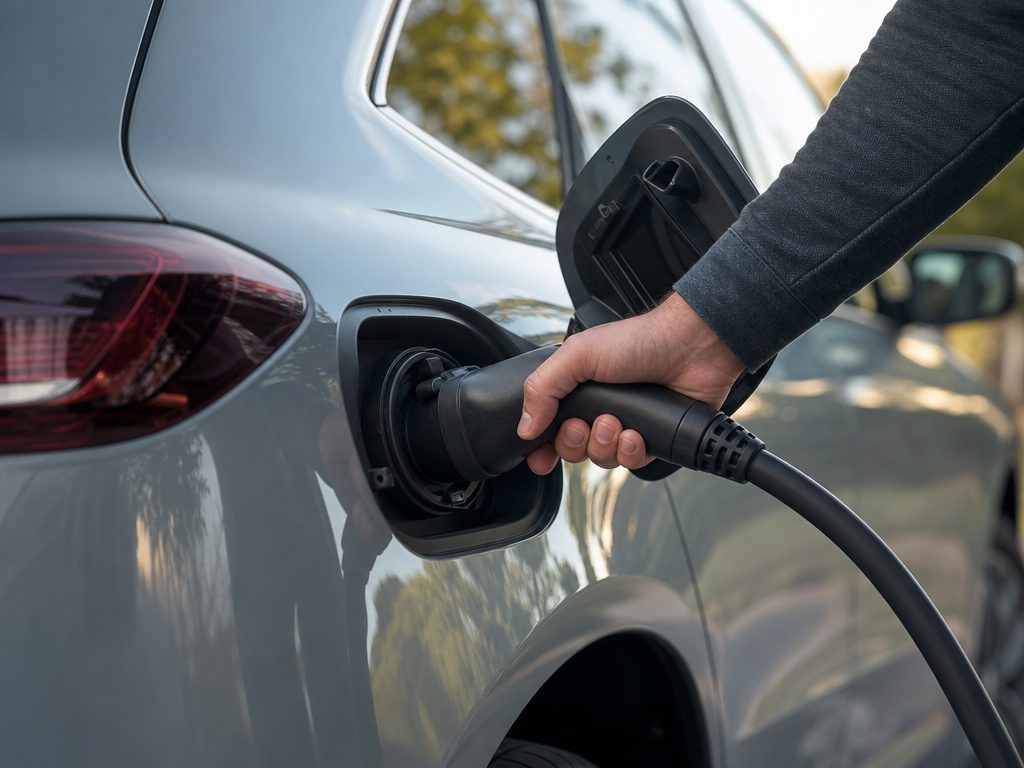
The four contact patches where your tires meet the road—each roughly the size of a human hand—have a massive influence on your vehicle's energy consumption. As a tire rolls under the weight of a vehicle, it continuously deforms and recovers its shape. This physical deformation generates internal friction and heat, a phenomenon known as rolling resistance. Overcoming this resistance requires a continuous application of energy from the vehicle's powertrain.
To maximize efficiency, eco-friendly vehicles require specialized Low Rolling Resistance Tires (LRRTs). These tires are engineered with advanced silica-based rubber compounds, stiffer sidewalls, and optimized tread patterns designed to minimize energy loss as the tire rolls. According to data from the U.S. Environmental Protection Agency (EPA), a 5% to 7% reduction in tire rolling resistance translates directly to an approximate 1% improvement in overall fuel or energy economy.
For electric vehicles, tire selection is particularly critical. EVs are significantly heavier than comparable gasoline cars due to their massive, low-mounted battery packs. This increased curb weight puts immense structural stress on the tires. Consequently, EV-specific tire lines (such as the Michelin ePrimacy, Bridgestone Turanza EV, or Hankook iON series) are engineered to handle high load capacities and deliver low rolling resistance without sacrificing safety or longevity.
While LRRTs are highly efficient, they involve engineering trade-offs. To achieve low rolling resistance, these tires may utilize harder rubber compounds or shallower tread depths, which can sometimes result in slightly longer wet-weather stopping distances or a firmer ride quality compared to ultra-high-performance passenger tires.
Furthermore, the efficiency benefits of LRRTs are highly dependent on proper maintenance. Every single pound per square inch (PSI) below your vehicle's recommended tire pressure increases rolling resistance, drawing more energy from the battery and reducing your real-world range. When replacing your vehicle's tires, always consult a trusted tire professional to select replacements that match the original equipment manufacturer (OEM) specifications for load index, speed rating, and rolling resistance.
Sources: www.epa.gov
5. Active Aerodynamics and Optimized Wheel Designs
At highway speeds, aerodynamic drag becomes the single greatest obstacle to a vehicle's efficiency. The energy required to push a vehicle through the air increases exponentially with speed. While internal combustion vehicles can afford to be somewhat less aerodynamic because they have access to energy-dense liquid fuel, electric vehicles must be exceptionally slippery to preserve battery range.
According to aerodynamic research data from manufacturers like Porsche, aerodynamic drag accounts for roughly 30% to 40% of energy losses in electric vehicles during standard testing cycles, and can exceed 50% in real-world highway driving. In contrast, drag accounts for only about 10% of overall energy losses in conventional internal combustion engine (ICE) vehicles, which are dominated by thermal and mechanical losses.
To minimize this drag, modern eco-friendly vehicles incorporate a mix of active and passive aerodynamic features:
• Active Grille Shutters (Variable Cooling Flaps): Electric motors and batteries require far less cooling airflow than hot internal combustion engines. Active grille shutters, located in the front bumper, remain completely closed during normal driving to streamline airflow over the front of the vehicle. They automatically open only when sensors indicate that the battery, motors, or climate control system require additional cooling air.
• Aerodynamic Wheel Designs: Standard multi-spoke wheels create massive air turbulence within the wheel wells as they spin. Aerodynamic wheels feature flat, closed-off surfaces or specialized lightweight inserts that smooth the airflow along the sides of the vehicle, reducing drag.
• Smooth Underbody Paneling: Because electric vehicles do not have hot exhaust pipes, catalytic converters, or driveshafts running beneath the cabin, manufacturers can completely seal the vehicle's underbody with flat panels. This allows air to slide smoothly beneath the chassis with minimal turbulence.
• Active Rear Spoilers and Air Dams: Some high-end eco-vehicles feature active spoilers that adjust their angle based on speed, optimizing the balance between drag reduction and high-speed stability.
When shopping, pay close attention to the vehicle's drag coefficient (Cd). Highly aerodynamic modern sedans (such as the Hyundai Ioniq 6 or Tesla Model S) achieve incredibly low drag coefficients of 0.21 or lower, which directly translates to superior highway range and reduced wind noise in the cabin.
6. Intelligent Eco-Routing and Predictive Telematics
The most efficient mile is the one driven with the least amount of resistance. Traditional navigation systems focus almost exclusively on finding the fastest or shortest route between two points. However, the fastest route often involves high-speed highways where aerodynamic drag is maximized, or routes with steep elevation changes that drain a battery rapidly.
Modern eco-friendly vehicles feature advanced navigation systems equipped with intelligent eco-routing. These systems analyze a multitude of real-world variables—including speed limits, historical traffic congestion, real-time road conditions, and topographical elevation data—to calculate the route that will consume the absolute minimum amount of energy. Research indicates that utilizing energy-optimized path planning algorithms can reduce a vehicle's electrical energy consumption by an average of 8.2% to 12.5%, and up to 15.2% in highly optimized connected-vehicle scenarios, with only minimal additions to overall travel time.
Furthermore, predictive telematics can actively sync your planned route with the vehicle's drivetrain and battery management system (BMS). For example:
• Topographical Management: If the navigation system knows a long, steep downhill descent is approaching, the BMS can proactively allow the battery level to drop slightly beforehand. This ensures there is ample chemical capacity within the battery to capture and store 100% of the upcoming regenerative braking energy, rather than wasting it as friction heat because the battery was already full.
• Active Thermal Preconditioning: If you are routing to a high-speed DC fast charger, the vehicle will use predictive telematics to warm or cool the battery to its optimal charging temperature before you arrive. This minimizes charging times and reduces thermal stress on the battery cells.
Because these advanced navigation features rely on real-time data feeds and cloud computing, they are frequently tied to connected-car subscription services. Before purchasing, ask the dealership about the ongoing costs of these subscriptions after the initial trial period (which typically ranges from 1 to 3 years) and verify how map updates are handled.
7. Modular and Highly Recyclable Battery Architecture
For any electric or hybrid vehicle, the high-voltage battery pack is the most resource-intensive, expensive, and environmentally impactful component to manufacture. The extraction and processing of critical battery minerals—such as lithium, cobalt, nickel, and manganese—carry significant environmental and ethical footprints. Therefore, a truly sustainable vehicle must be designed with the battery's entire lifecycle in mind.
When researching vehicles, look for manufacturers that utilize a modular battery architecture. In a modular design, the battery pack is constructed from distinct, self-contained modules, each housing a cluster of individual battery cells. If a single cell degrades prematurely or suffers a manufacturing defect, a certified technician can open the pack and replace only the affected module. In contrast, non-modular or highly integrated "cell-to-pack" structural designs often make individual repairs impossible; a single faulty cell can render the entire battery pack useless, forcing a premature and highly wasteful replacement of the entire unit.
To accelerate this transition, the U.S. Department of Energy's Advanced Research Projects Agency-Energy (ARPA-E) launched the CIRCULAR program, allocating $36 million to fund projects aimed at developing modular battery packs designed for rapid robotic disassembly, repair, and reuse. This initiative highlights the critical industry shift toward serviceability and circularity.
Furthermore, ask about the manufacturer's battery recycling partnerships. Leading automakers are establishing closed-loop recycling processes where end-of-life batteries are disassembled, and hydrometallurgical recycling is used to recover up to 95% of critical minerals to manufacture brand-new batteries. The EPA and DOE are also actively developing extended battery producer responsibility frameworks to standardize safe collection and recycling across the industry.
Sources: arpa-e.energy.gov
The Eco-Friendly Vehicle Buyer's Decision Matrix
Choosing the right eco-friendly vehicle requires matching your driving habits, climate, and charging access to the correct powertrain technology. Use the decision matrix below to guide your purchase:
• Battery Electric Vehicle (BEV):
- Primary Energy Source: 100% Electricity
- Tailpipe Emissions: Zero
- Best Driving Profile: Daily commutes, predictable routes, access to home charging
- Cold Weather Impact: High (range can drop 20-40% without a heat pump)
- Upfront Cost: Higher (partially offset by incentives)
• Plug-in Hybrid (PHEV):
- Primary Energy Source: Electricity + Gasoline
- Tailpipe Emissions: Zero (in EV mode) / Low (in gas mode)
- Best Driving Profile: Short daily commutes with occasional long-distance road trips
- Cold Weather Impact: Moderate (engine can assist with cabin heating)
- Upfront Cost: Moderate to High
• Hybrid Electric Vehicle (HEV):
- Primary Energy Source: Gasoline (assisted by electricity)
- Tailpipe Emissions: Low
- Best Driving Profile: High-mileage city driving without access to charging infrastructure
- Cold Weather Impact: Low (engine provides ample cabin heat)
- Upfront Cost: Lower (comparable to standard gas cars)
Step-by-Step Buying Checklist:
1. Assess Your Charging Access: Can you install a Level 2 charger at home, or does your workplace offer charging? If yes, a BEV or PHEV is highly viable. If no, an HEV is likely the most practical and efficient choice.
2. Calculate Your Daily Mileage: If your daily round-trip commute is under 40 miles, a PHEV can operate almost exclusively as an electric vehicle, saving gasoline while providing a backup engine for long trips.
3. Evaluate Your Climate: If you live in a region where winter temperatures regularly drop below freezing, prioritize BEVs equipped with a cabin heat pump to preserve winter driving range.
4. Review Local Incentives: Research federal, state, and local tax credits or rebates. Be aware that incentive rules, income limits, and vehicle price caps change frequently.
Lifecycle Analysis: Beyond the Tailpipe
To truly understand the environmental credentials of an eco-friendly vehicle, we must look "beyond the tailpipe" and conduct a lifecycle analysis (LCA). An LCA evaluates the total environmental impact of a vehicle across three distinct phases: manufacturing, operation, and end-of-life disposal.
During the manufacturing phase, electric vehicles actually have a higher carbon footprint than comparable gasoline vehicles. This "carbon debt" is primarily due to the energy-intensive mining, refining, and assembly processes required to produce the lithium-ion battery pack. However, once the vehicle is on the road, the operational phase begins to pay back this debt. Because electric motors are vastly more efficient than internal combustion engines, an EV quickly offsets its manufacturing emissions.
The speed at which an EV offsets its carbon debt depends heavily on the "grid mix"—the source of the electricity used to charge the vehicle. If you charge your EV in a region that relies heavily on coal-fired power plants, the operational emissions are higher than if you charge in a region powered by solar, wind, hydro, or nuclear energy. However, even on the dirtiest electrical grids, modern EVs are still cleaner over their lifespan than equivalent gasoline vehicles due to the high efficiency of centralized power generation compared to thousands of individual internal combustion engines.
By choosing a vehicle equipped with highly efficient features—such as active aerodynamics, low rolling resistance tires, and a heat pump—you minimize the total kilowatt-hours of electricity drawn from the grid. This makes your vehicle greener regardless of the local grid mix and accelerates the point at which your vehicle offsets its manufacturing carbon debt.
Financial Incentives, Warranties, and Verification Strategies
Navigating the financial and legal aspects of purchasing an eco-friendly vehicle can be daunting. To protect your investment and maximize your savings, keep the following strategies in mind:
• Verify Financial Incentives: Government incentives, such as the federal clean vehicle credit in the United States, are subject to strict eligibility criteria. These include vehicle price caps, buyer income limits, and specific sourcing requirements for battery minerals and components. Because these regulations and eligible vehicle lists are updated frequently, always qualify eligibility and verify current terms on official government portals, such as the U.S. Internal Revenue Service (IRS) or the EPA's FuelEconomy.gov website before making a purchase.
• Understand Battery Warranties: In the United States, federal law mandates that electric and hybrid vehicle traction batteries be warranted for a minimum of 8 years or 100,000 miles (whichever comes first). In states that have adopted California's stricter emissions standards, this coverage is extended to 10 years or 150,000 miles. However, you must read the fine print: verify what constitutes "excessive degradation." Most manufacturers warrant that the battery will retain at least 70% to 75% of its original capacity during the warranty period. If it drops below this threshold, the manufacturer must repair or replace the pack.
• Dealer Verification Checklist: When you are standing on the dealership lot, do not rely solely on the salesperson's verbal assurances. Use this checklist to verify the vehicle's exact specifications:
1. Examine the Monroney Sticker: Check the official window sticker for the exact EPA-rated range, MPGe, and fuel economy.
2. Run the VIN: Request a detailed build sheet using the vehicle's unique Vehicle Identification Number (VIN) to confirm the presence of optional equipment like a heat pump or specific active aerodynamic packages.
3. Inquire About Software Subscriptions: Ask for a written breakdown of any ongoing subscription costs associated with the vehicle's intelligent navigation, eco-routing, or over-the-air (OTA) update services.
4. Review the Warranty Booklet: Confirm the specific battery degradation threshold and warranty transferability if you are purchasing a pre-owned vehicle.
Sources: www.irs.gov, www.fueleconomy.gov, www.kbb.com