Bag yields vary by manufacturer and mix; this tool uses 0.60 ft³ for an 80 lb bag and 0.45 ft³ for a 60 lb bag.
Round material purchases up and confirm site conditions with the supplier or contractor.
Understanding Concrete Volume: Cubic Feet vs. Cubic Yards
When planning any concrete project, the first step is to calculate the exact volume of material required. In the construction industry, concrete is measured and ordered by volume rather than area or weight [1.2.5]. The standard unit of measurement for large pours is the cubic yard, while smaller projects and bagged mixes are typically calculated in cubic feet. Understanding the relationship between these two units is essential: one cubic yard is equal to exactly 27 cubic feet.
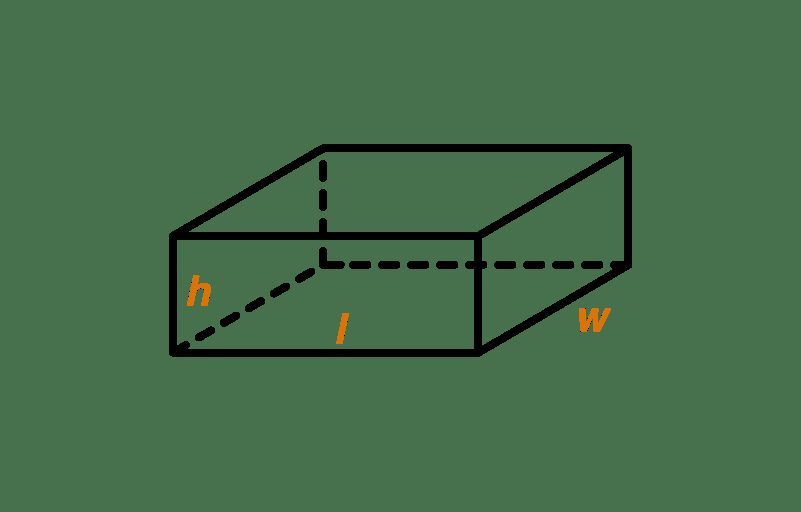
To calculate the volume of a standard rectangular slab, you must multiply its length by its width and its thickness. Because slab thickness is almost always measured in inches, you must first convert that thickness into feet by dividing by 12. The complete formula for volume in cubic feet is:
Volume (cubic feet) = Length (feet) x Width (feet) x (Thickness (inches) / 12)
To convert this result into cubic yards, simply divide the total cubic feet by 27. For example, a patio slab that measures 10 feet long, 10 feet wide, and 4 inches thick has a volume of 33.33 cubic feet (10 x 10 x 0.333). Dividing 33.33 by 27 yields approximately 1.23 cubic yards. Accurate measurements prevent costly under-ordering or paying for excess material that you cannot use.
Sources: www.cement.org
The Math of Bagged Concrete: Standard Yields and Bag Weights
For smaller projects, purchasing pre-mixed bags of concrete from home improvement centers is often the most practical choice. However, because bags are sold by weight (such as 40, 60, or 80 pounds), you must convert your volumetric needs into a specific bag count. Each bag weight yields a precise volume of wet, mixed concrete. Standard industry yields for common bag sizes are as follows:
- 80 lb bag: Yields approximately 0.60 cubic feet of mixed concrete. It takes exactly 45 of these bags to equal one cubic yard.
- 60 lb bag: Yields approximately 0.45 cubic feet of mixed concrete. It takes exactly 60 of these bags to equal one cubic yard.
- 50 lb bag: Yields approximately 0.375 cubic feet of mixed concrete. It takes exactly 72 of these bags to equal one cubic yard.
- 40 lb bag: Yields approximately 0.30 cubic feet of mixed concrete. It takes exactly 90 of these bags to equal one cubic yard.
These standard yields are consistent across major manufacturers like Quikrete and Sakrete. To find the number of bags you need, divide your project's total calculated cubic feet by the yield of your chosen bag size. For instance, if your project requires 15 cubic feet of concrete and you are using 80 lb bags, you will need 25 bags (15 / 0.60 = 25). Always verify the specific yield printed on the packaging, as specialized mixes (such as lightweight or high-strength formulas) may deviate slightly from these standard values.
Sources: www.quikrete.com, www.sakrete.com
How to Calculate Concrete for Slabs, Footings, and Columns
Different concrete projects require different geometric formulas to estimate volume accurately. While rectangular slabs are straightforward, structural footings and cylindrical columns require specialized calculations.
- Continuous Footings: Often placed beneath retaining walls or home foundations, footings are essentially long, narrow rectangular prisms. You calculate their volume using the same formula as a slab: multiply the total length of the footing by its width and its depth (all converted to feet).
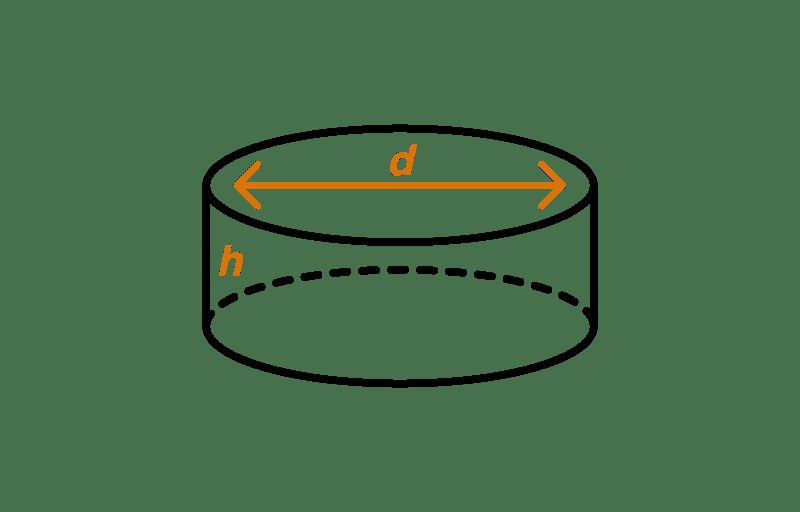
- Cylindrical Columns and Post Holes: Setting fence posts, deck piers, or structural columns requires calculating the volume of a cylinder. The formula for cylinder volume is Volume = pi x r^2 x h, where r is the radius of the column (half of the diameter) and h is the depth or height. To use this formula, convert the diameter from inches to feet first. For example, for a 10-inch diameter post hole that is 3 feet deep, the radius is 5 inches, which is 0.417 feet (5 / 12). The volume is calculated as: 3.14159 x (0.417)^2 x 3 = 1.64 cubic feet. Using 80 lb bags (0.60 cubic feet yield), you would divide 1.64 by 0.60 to get 2.73 bags, which rounds up to 3 bags per hole.
When digging footings or post holes, always consult your local building department to verify the required frost line depth, as structural footings must extend below this line to prevent seasonal shifting.
Sources: www.concrete.org
The Critical 10% Waste Factor: Why You Should Always Round Up
One of the most common mistakes in concrete planning is purchasing the exact mathematical volume calculated. In real-world construction, a perfect pour is virtually impossible due to several physical variables. For this reason, professional contractors always add a standard 10% waste factor to their material orders.
Several factors contribute to this necessary buffer:
- Uneven Subgrade: Excavated ground is rarely perfectly flat. Slight depressions, rocks, or loose soil can easily increase the depth of your pour by half an inch, which significantly increases the required volume over a large area.
- Formwork Deflection: Wet concrete is incredibly heavy, weighing approximately 150 pounds per cubic foot. This weight exerts immense pressure on wooden forms, causing them to bow or flex outward slightly, which expands the volume of the slab.
- Spillage and Tool Retention: Some concrete is inevitably lost during the mixing and pouring process. Material clings to the inside of mixing drums, wheelbarrows, shovels, and trowels.
- Compaction and Settling: When concrete is consolidated using vibrators or tamping tools to remove air pockets, the wet volume decreases slightly.
To apply the waste factor, simply multiply your final calculated volume (in cubic feet, cubic yards, or bags) by 1.10. If your math indicates you need 50 bags of concrete, you should purchase 55 bags (50 x 1.10 = 55). It is far better to have two or three bags left over at the end of the day than to run short mid-pour, which creates weak joints and ruins the structural integrity of your project.
Sources: www.sakrete.com
Bags vs. Ready-Mix: Deciding the Best Delivery Method
Before purchasing materials, you must decide whether to mix bagged concrete yourself or order a delivery from a ready-mix supplier. The decision depends on three main factors: project volume, budget, and labor availability.
- The Cost Crossover Point: Bagged concrete is highly economical for small projects under 1 cubic yard (equivalent to 45 bags of 80 lb mix). At an average retail price of $6 to $8 per 80 lb bag, a cubic yard of bagged concrete costs roughly $270 to $360. Ready-mix concrete is significantly cheaper per unit, often costing between $150 and $200 per cubic yard. However, ready-mix companies typically enforce a minimum order of 1 to 3 cubic yards and charge 'short-load' fees of $50 to $150 for deliveries below their minimum. Consequently, the financial crossover point where a delivery truck becomes cheaper is usually around 1.5 to 2 cubic yards.
- Physical Labor vs. Time Pressure: Mixing 45 bags of 80 lb concrete by hand requires moving and mixing 3,600 pounds of dry material. This is exhausting work that requires a mechanical mixer to complete before the first batches begin to set. Conversely, a ready-mix truck discharges a massive volume of concrete in minutes. This eliminates mixing labor but introduces intense time pressure; you must have a capable crew on hand to place, screed, and finish the concrete before it hardens.
- Site Accessibility: Ready-mix trucks are extremely heavy and can crack residential driveways or sink into soft lawns. If the truck cannot park directly next to your forms, you will need to transport the wet concrete using wheelbarrows or hire a concrete pump, which adds to the project cost.
Because concrete prices, delivery fees, and short-load policies fluctuate based on regional fuel costs and local market demand, you should call local ready-mix suppliers to get current quotes and verify their site-access requirements before making a final decision.
Sources: www.quikrete.com, www.sakrete.com
Best Practices for Mixing, Pouring, and Curing Concrete
Achieving a durable, crack-resistant concrete structure requires strict adherence to proper mixing and curing techniques. The strength of concrete is largely determined by its water-to-cement ratio. Adding too much water makes the wet concrete easier to pour and work with, but it severely weakens the final cured product, leading to surface scaling, cracking, and structural failure. Always follow the manufacturer's precise water recommendations—typically about 3 quarts of clean water per 80 lb bag of standard mix. The mixed concrete should have a thick, clay-like consistency that holds its shape when squeezed, rather than a soupy, runny texture.
Once poured, concrete must be properly cured to reach its full design strength. Concrete does not dry out to harden; rather, it undergoes a chemical reaction called hydration. If the moisture evaporates too quickly, the hydration process stops, resulting in weak concrete. To prevent this, keep the surface damp by spraying it with a fine mist of water and covering it with plastic sheeting, or apply a liquid curing compound immediately after finishing. According to the American Concrete Institute (ACI), standard concrete mixes require a minimum of 3 to 7 days of moist curing to reach adequate strength, and they achieve their full rated structural strength (measured in PSI) at 28 days.
Finally, prioritize safety during your project. Wet cement is highly alkaline and can cause severe chemical burns on contact with bare skin. Always wear heavy-duty, alkali-resistant gloves, safety glasses, long-sleeved shirts, long pants, and waterproof boots. If dry cement dust is present, wear a tight-fitting dust mask to protect your lungs. For detailed guidelines on concrete mix designs, structural standards, and safety protocols, consult the American Concrete Institute (ACI) at concrete.org or the American Cement Association (ACA) at cement.org.
Sources: www.concrete.org, www.cement.org