The Shift from Following Instructions to Understanding Technique
For many beginners, cooking feels like a high-stakes chemistry experiment where deviating a fraction of an inch from a recipe card guarantees disaster. However, true culinary confidence comes from moving away from rigid instructions and moving toward an intuitive understanding of how heat, moisture, and ingredients interact. When you understand the underlying mechanics of cooking, you can walk into a kitchen with a random assortment of ingredients and successfully assemble a delicious meal.
To make this transition, you need resources that teach concepts rather than just step-by-step instructions. The right books act as culinary mentors, explaining the "why" behind kitchen tasks. They teach you how to recognize when a pan is hot enough by sound, how to rescue a sauce that has split, and how to adjust seasoning on the fly. Investing time in these foundational texts will pay dividends for the rest of your life, saving you money on takeout and reducing food waste. Instead of memorizing a thousand individual recipes, you learn to master a dozen core techniques that can be applied to thousands of different ingredients.
Salt, Fat, Acid, Heat: Navigating the Core Elements of Flavor
Samin Nosrat’s modern masterpiece, "Salt, Fat, Acid, Heat," simplifies the complex world of flavor dynamics into four fundamental pillars. Nosrat argues that if you master these four elements, your food will always taste balanced and delicious. The book is highly approachable, featuring charming illustrations by Wendy MacNaughton instead of glossy, intimidating photographs, which helps keep the focus entirely on the concepts.
To put these lessons into practice, try a simple, reversible exercise: make a basic tomato sauce or soup and taste it at various stages. If it tastes flat, add a pinch of salt. If it tastes heavy or dull, splash in a few drops of vinegar or lemon juice to experience how acid instantly brightens flavor. Learning to balance these four elements by taste, rather than by exact measurements, is the single most important step toward becoming an independent home cook.
Nosrat's philosophy teaches us that salt enhances flavor, fat carries flavor and alters texture, acid balances flavor by cutting through richness, and heat determines the texture of food. By learning to adjust these variables dynamically, you can rescue almost any culinary mishap. For more details on her teaching philosophy and accompanying resources, you can explore her official website. Please note that book prices and edition availability can vary over time, so check your local bookstore or library for current options.
Sources: www.saltfatacidheat.com
How to Cook Everything: A Practical Blueprint for Daily Meals
Mark Bittman’s "How to Cook Everything" is a massive, comprehensive tome that lives up to its ambitious title. Instead of focusing on haute cuisine or complex presentations, Bittman emphasizes simple, straightforward preparations of everyday ingredients. It is the ultimate utility manual for the home kitchen, covering everything from how to boil an egg to how to prep fresh artichokes.
What makes this book exceptionally valuable for beginners is its focus on variations. Almost every base recipe is accompanied by a list of simple substitutions and flavor adjustments. This teaches you how to treat recipes as flexible templates rather than strict laws. If you do not have a specific herb or protein on hand, Bittman’s guides show you how to confidently swap it out with whatever is currently sitting in your refrigerator.
Bittman's approach is highly democratic and practical, stripping away the snobbery often associated with gourmet cooking. His work, which can be explored further on his official platform, serves as a reminder that good food does not require exotic ingredients or professional-grade equipment. It simply requires a willingness to experiment and a solid understanding of basic culinary building blocks.
Sources: markbittman.com
The Food Lab: Applying Scientific Method to Home Cooking
If you are someone who needs to know the exact physical and chemical reasons why a technique works, J. Kenji López-Alt’s "The Food Lab: Better Home Cooking Through Science" is your ideal culinary textbook. López-Alt uses rigorous scientific testing to debunk common kitchen myths, explaining the precise temperatures at which proteins contract, how starch behaves in pasta water, and how to achieve the perfect sear on a steak.
Understanding these scientific principles allows you to troubleshoot kitchen failures with ease. If your roasted potatoes did not turn out crispy, "The Food Lab" explains the relationship between pH levels, starch gelatinization, and surface area, giving you concrete adjustments to make next time. While the book is thick and detailed, its practical experiments make the science incredibly accessible and directly applicable to daily meal preparation.
López-Alt’s work, which expanded from his popular column on Serious Eats, teaches home cooks to think like scientists. By understanding concepts like the Maillard reaction (the chemical reaction between amino acids and reducing sugars that gives browned food its desirable flavor) and the mechanics of emulsion, you gain total control over your ingredients. You can find more of his science-backed culinary guides and articles directly on Serious Eats.
Sources: www.seriouseats.com

Ratio: Unlocking Culinary Freedom Through Formulas
Michael Ruhlman’s "Ratio: The Simple Codes Behind the Craft of Everyday Cooking" takes a unique, mathematical approach to the kitchen. Ruhlman argues that recipes are actually just proportions of ingredients. If you memorize a few basic ratios, you no longer need to look up recipes for bread dough, vinaigrettes, pancakes, or mayonnaise.
For example, once you learn that a standard pie dough is a 3:2:1 ratio of flour, fat, and liquid by weight, you can easily scale a crust to fit any size pan without consulting a book. Similarly, a classic vinaigrette is a 3:1 ratio of oil to acid. This approach demystifies baking and sauce-making, converting what often feels like magic into predictable arithmetic. It also allows you to easily customize your creations; as long as you keep the core ratio intact, you can add whatever spices, herbs, or flavorings you desire.
By shifting your focus from volume measurements (cups and tablespoons) to weight measurements (grams and ounces), Ruhlman’s methodology brings unparalleled consistency to your kitchen. You can learn more about his books and culinary philosophy on his official website.
Sources: ruhlman.com
Joy of Cooking: The Classic Culinary Encyclopedia
First published in the 1930s and continuously updated across decades, Irma S. Rombauer’s "Joy of Cooking" remains an indispensable reference manual for home cooks of all experience levels. It acts as a safety net for almost any kitchen scenario you might encounter. Whether you need to know how to clean fresh shellfish, substitute buttermilk in a baking recipe, or carve a roasted turkey, this book has a dedicated page explaining the process.
Because it has been refined over generations, the techniques are highly reliable and time-tested. When using older or revised editions, keep in mind that ingredient availability, nutritional philosophies, and food safety guidelines have evolved over the years. Always cross-reference older canning or meat-temperature instructions with current USDA guidelines to ensure your cooking remains safe as well as delicious.
For instance, older editions of classic cookbooks may suggest cooking pork or poultry to temperatures that are now considered either unnecessarily high (resulting in dry meat) or dangerously low. To ensure your meals are both delicious and safe, always consult the official USDA Safe Minimum Internal Temperature Chart for up-to-date guidelines on safe food handling.
Sources: www.fsis.usda.gov
The Missing Ingredient: Choosing Your Book Based on Your Learning Style
Not every home cook learns the same way. To build a successful culinary library, you must match your educational resources with your cognitive learning style. If you try to force yourself through a dense, scientific text when you are a highly visual, intuitive learner, you will likely end up discouraged and order takeout instead.
Consider this quick guide to find your perfect culinary starting point:
- **The Visual and Intuitive Learner**: Start with Samin Nosrat’s *Salt, Fat, Acid, Heat*. The beautiful, hand-drawn infographics and narrative-driven chapters are perfect for those who learn by feeling, tasting, and visualizing concepts.
- **The Analytical and Scientific Thinker**: Start with J. Kenji López-Alt’s *The Food Lab*. If you need to understand the molecular structure of an egg before you feel comfortable poaching one, this book’s rigorous testing and data-driven approach will speak your language.
- **The Practical Generalist**: Start with Mark Bittman’s *How to Cook Everything*. If you want a straightforward, no-nonsense manual that tells you how to prep and cook any ingredient in your fridge with minimal fuss, this is your utility belt.
- **The Mathematical and Formulaic Mind**: Start with Michael Ruhlman’s *Ratio*. If you prefer patterns, scaling, and baking formulas over narrative recipes, this book will unlock the kitchen for you.
- **The Traditionalist and Reference Seeker**: Start with the *Joy of Cooking*. If you want a comprehensive, multi-generational encyclopedia to sit on your counter and answer every 'How do I prep this?' question, this classic is unmatched.
Beyond the Books: Developing Sensory Intuition in the Kitchen
While books provide the theoretical foundation, the ultimate goal of reading them is to transition your focus away from the page and onto the food in front of you. This requires developing your sensory intuition—using your eyes, ears, nose, and hands to monitor the cooking process in real time.
To build this intuition, practice active observation during every meal prep:
- **Listen to the Sizzle**: The sound of food cooking is a direct indicator of moisture and temperature. A loud, violent splattering sound means there is too much water in the pan, which drops the temperature and prevents browning. A gentle, steady sizzle indicates that water is evaporating at a controlled rate, allowing the Maillard reaction to occur. If the pan goes completely silent, your heat is too low; if it begins to smoke and crackle aggressively, your fat is burning.
- **Watch the Color**: Do not rely solely on a kitchen timer to tell you when roasted vegetables are done. Watch for the caramelization on the edges. Look at how the proteins change color from translucent to opaque.
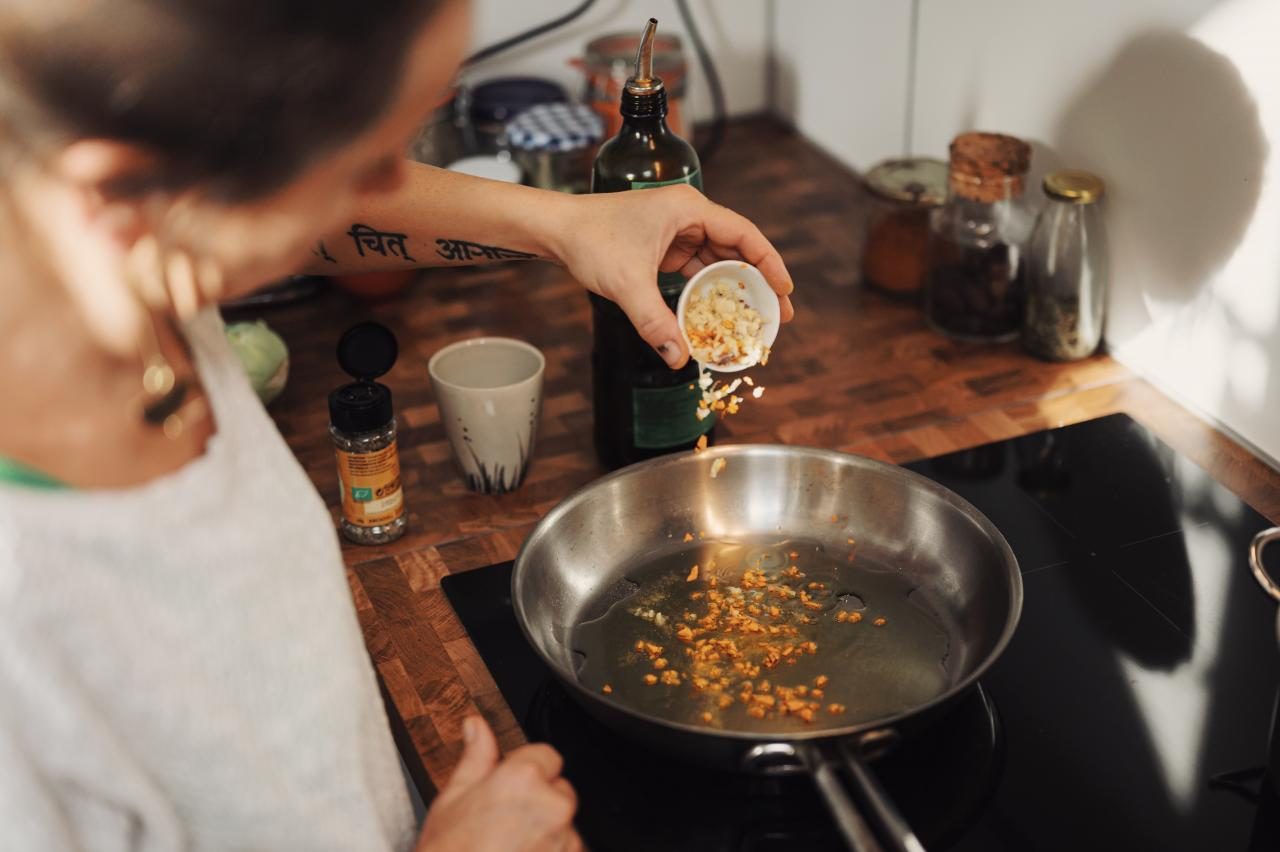
- **Smell the Aromas**: Garlic transitions from raw and pungent to sweet and fragrant in a matter of seconds. If you smell a bitter, acrid aroma, your garlic has burned, and you must start over. Training your nose to recognize the peak of fragrance is key to timing your ingredients.
- **Touch for Texture**: Gently press on a searing steak or a baking loaf of bread. Over time, you will learn to associate the springiness of the meat or the hollow sound of a tapped crust with perfect doneness.
Essential Kitchen Tools That Unlock the Lessons in These Books
To successfully apply the lessons from these foundational books, you do not need a kitchen filled with expensive, single-use gadgets. Instead, you need a small collection of high-quality, versatile tools that allow you to execute techniques with precision.
Here is the essential gear checklist to unlock your books' potential:
- **A Digital Kitchen Scale**: Essential for Michael Ruhlman’s *Ratio*. Measuring flour by volume (cups) is notoriously inaccurate, as packing can vary the weight by up to 50%. A digital scale ensures your baking ratios are mathematically perfect every time.
- **An Instant-Read Digital Thermometer**: Crucial for J. Kenji López-Alt’s *The Food Lab*. Stop guessing if your chicken is cooked. A reliable digital thermometer is the single best tool to prevent foodborne illness while ensuring your meat remains incredibly juicy.
- **An 8-Inch Chef’s Knife**: Your primary interface with your ingredients. A sharp, high-quality knife makes prep work safer, faster, and more enjoyable.
- **A Heavy Cast-Iron or Carbon Steel Skillet**: These pans retain heat exceptionally well, which is vital for achieving the perfect sear described in *Salt, Fat, Acid, Heat* and *The Food Lab*.
- **A Large Wooden Cutting Board**: Provide yourself with ample space to prep. A cramped cutting board leads to messy, uneven cuts and increases the risk of slips and injuries.
From Theory to Table: A Step-by-Step Roadmap for Your First "No-Recipe" Meal
Ready to put the books away and cook your first completely intuitive meal? Follow this simple, structured roadmap to build a delicious dinner using nothing but your newly acquired culinary principles:
1. **Select Your Canvas (The Protein and Vegetable)**: Grab whatever is in your fridge. For this exercise, let's use a chicken breast and a bunch of broccoli.
2. **Choose Your Technique (Heat)**: Instead of boiling or steaming, let's use dry heat to maximize flavor. We will pan-sear the chicken to get a beautiful crust and roast the broccoli at high heat to caramelize its natural sugars.
3. **Prep and Measure (Ratio)**: If you want to make a quick pan sauce to go with your chicken, remember a simple pan-sauce ratio: sear your meat, deglaze the pan with an acidic liquid (like wine or lemon juice), reduce it, and swirl in cold butter (fat) off the heat to emulsify.
4. **Season and Balance (Salt, Fat, Acid, Heat)**: Salt your chicken generously before it hits the pan to draw out moisture and season the meat throughout. Toss your broccoli in a high-smoke-point fat (like avocado or canola oil) before roasting. Once everything is cooked, taste it. If the chicken tastes heavy, squeeze a fresh lemon wedge (acid) over it. If the broccoli tastes flat, add a pinch of flaky sea salt.
By breaking the meal down into these logical steps, you bypass the need for a recipe card entirely, creating a custom, chef-quality meal based on pure technique.
Navigating Food Safety and Modern Ingredient Substitutions
As you embark on your culinary journey, it is important to recognize that older cookbooks, while rich in technique, may not always align with modern food safety standards or contemporary dietary needs. For example, older editions of classic manuals might suggest cooking pork to 160°F, which modern culinary science and the USDA have revised down to 145°F (followed by a 3-minute rest) for a much juicier, yet perfectly safe, result.
Furthermore, modern home cooks frequently need to adapt classic recipes for gluten-free, vegan, or low-sodium diets. When substituting ingredients, use the principles of food science to guide you:
- **Gluten-Free Baking**: Gluten provides structure and elasticity. If you are using a gluten-free flour blend, you may need to add a binder like xanthan gum or increase the liquid ratio slightly to prevent crumbly results.
- **Egg Substitutes**: Eggs provide structure, moisture, and leavening. Understanding whether the egg in your recipe is acting as a binder (like in meatballs) or a leavening agent (like in a cake) will help you choose the correct substitute, such as applesauce, flaxseed meal, or aquafaba.
- **Sodium Reduction**: If you are reducing salt for health reasons, compensate by increasing your use of acids (citrus, vinegar) and aromatic spices to stimulate your taste buds and keep the flavor profile vibrant.
Always cross-reference older techniques with trusted, modern public health resources. For the most reliable, up-to-date guidelines on safe cooking temperatures and food preservation, refer directly to the USDA Food Safety and Inspection Service.
Sources: www.fsis.usda.gov